What is Localized Caller ID?
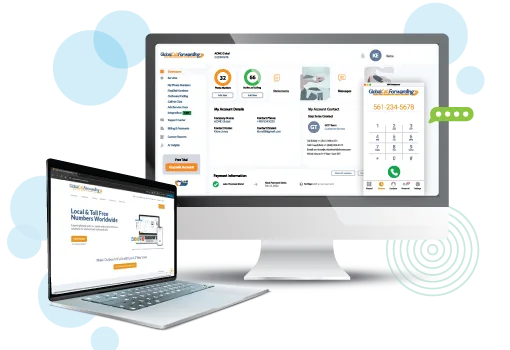
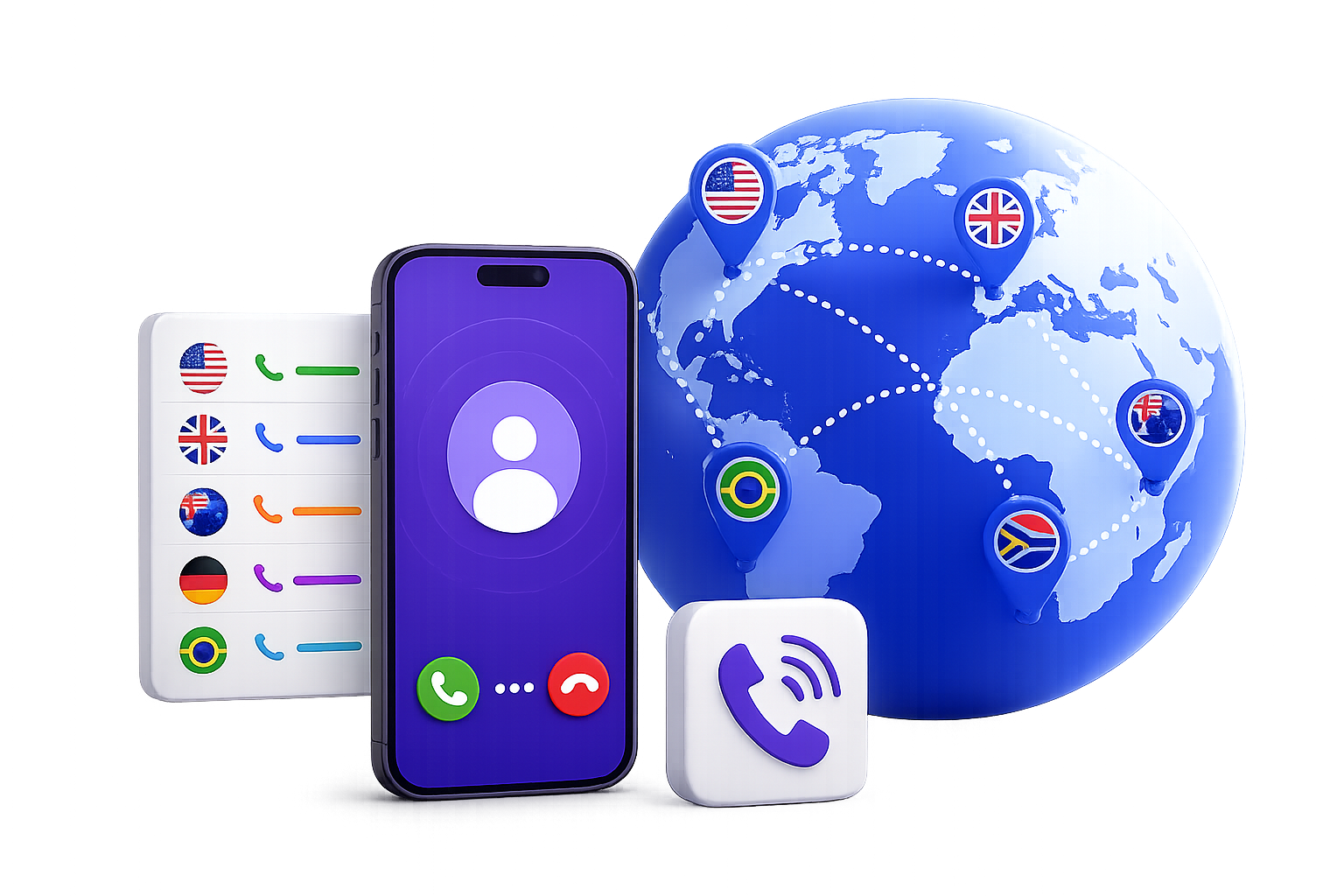
Localized Caller ID lets businesses display different outbound phone numbers based on the region or country they are calling. Instead of showing a single global number for every outbound call, businesses can assign local phone numbers they already own to specific countries, regions, or teams.
With Global Call Forwarding’s Localized Caller ID feature, the system automatically presents the most relevant caller ID for each outbound call. This helps businesses create a more local presence, improve customer trust, and increase answer rates when reaching customers internationally.
How Does Localized Caller ID with Global Call Forwarding Work?
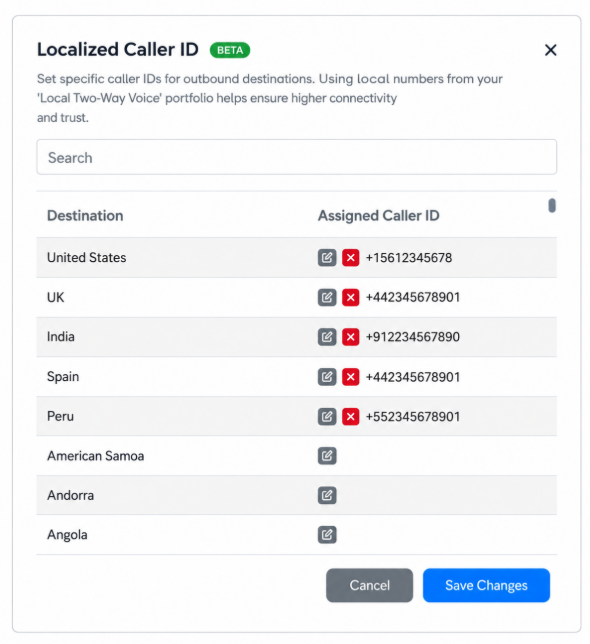
Businesses can assign virtual phone numbers from their inventory to specific countries or regions directly within the Global Call Forwarding control panel. For example:
- Calls placed to customers in the UK can automatically display a UK local number
- Calls to customers in Australia and New Zealand can display an Australian caller ID
- Calls to customers in the US, Canada, and Mexico can show a US toll-free or local number.
Once configured, the system automatically detects the destination being called and applies the assigned outbound caller ID without requiring manual selection from agents.
This enables businesses to centralize global outbound operations while still maintaining a local presence in each market they serve.
Benefits of Localized Caller ID
Localized Caller ID is especially valuable for businesses operating across multiple countries where customers may be hesitant to answer unfamiliar international numbers. Here’s how sales and support teams can benefit from this feature:
Increase Outbound Answer Rates — Customers are more likely to answer calls from recognizable local or regional numbers compared to unknown international numbers.
Build Trust with Customers — Displaying a local caller ID creates familiarity and credibility, helping businesses establish stronger connections with prospects and customers.
Support Global Expansion — Operate international sales and support teams from centralized locations while maintaining a localized customer experience.
Improve Customer Experience — Customers can easily identify who is calling, reducing confusion and improving communication consistency.
Streamline Global Operations — Automatically assign caller IDs based on region without requiring agents to manually switch numbers.
Maintain Brand Consistency — Use dedicated local or toll-free numbers for different countries, departments, campaigns, or customer groups.
Support Compliance and Regional Calling Requirements — In some regions, presenting a local caller ID can improve call deliverability and customer engagement.
How Teams Can Use Localized Caller ID
Whether your teams are making sales calls, conducting follow-ups, or handling customer support, Localized Caller ID helps businesses deliver a more familiar and professional calling experience across global markets.
1. Global Sales Teams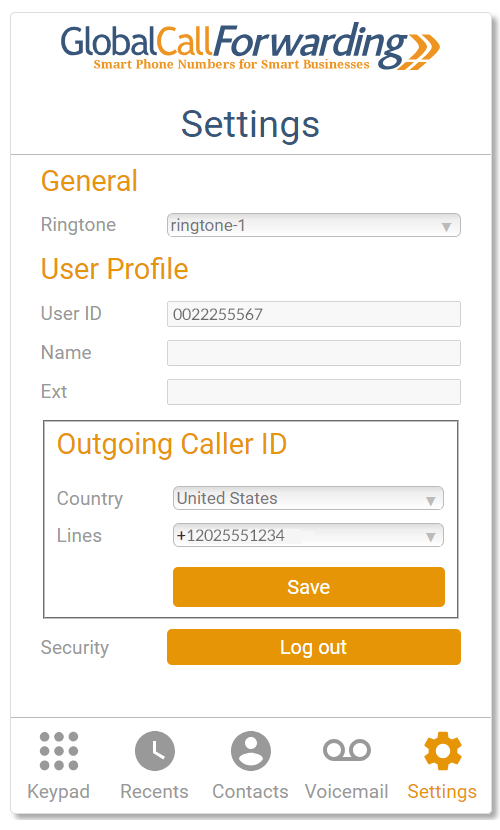
International sales teams can display local caller IDs when prospecting into different countries, increasing pickup rates and improving outreach performance. Example: A sales team based in Brazil can call US customers using a US local caller ID while simultaneously displaying UK numbers for prospects in London.
2. Customer Support Centers
Support agents handling customers across multiple countries can present regional support numbers to provide a more familiar support experience. Example: A centralized support center in the Philippines can display local caller IDs for customers in Canada, Germany, and Singapore.
3. Healthcare Organizations
Healthcare providers and telehealth services can improve patient responsiveness by displaying local clinic or regional support numbers.
4. Financial Services
Banks, fintech providers, and insurance companies can improve trust and reduce ignored calls by using recognizable local caller IDs for account notifications or customer outreach.
5. Travel and Hospitality
Airlines, travel agencies, and hospitality brands can use regional caller IDs for reservation updates, support callbacks, and customer assistance.
6. Distributed Global Teams
Remote and hybrid teams operating across regions can maintain consistent outbound identities tied to local markets.