


Home » Archive by category 'Business Phone Numbers'

Why Europe is Cracking Down on In-Country Caller ID via International Routes

Europe is tightening regulations around in-country caller IDs, especially when domestic numbers appear on calls that originate from outside the country. For years, global businesses used this method to boost answer rates and create a familiar, local experience for global customers. A call made from outside Europe could appear with a German, French, or UK number, helping businesses improve call pickup rates.

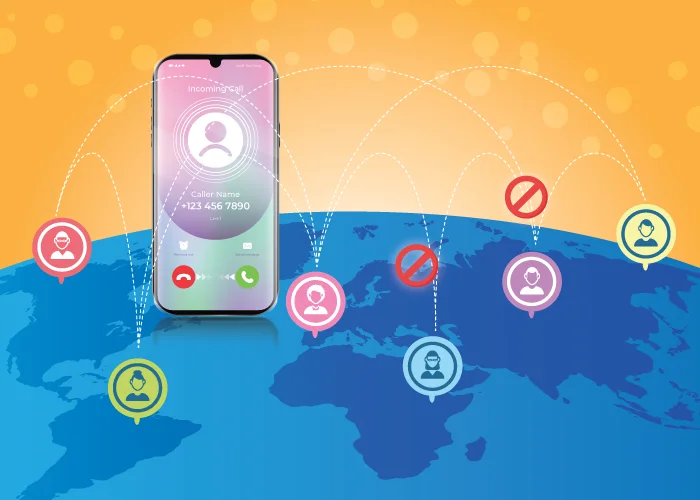
But the same technique has also been widely abused. Bad actors have used domestic-looking caller IDs to impersonate banks, government agencies, and trusted brands, often routing calls through international VoIP networks. This has weakened public confidence and forced regulators across Europe to enforce new regulations and reduce caller ID spoofing.

New measures, including Do-Not-Originate (DNO) registries, national CLI blocking rules, and stronger authentication requirements, are now in force, with more countries preparing additional restrictions. These changes directly affect multinational sales, support, and operations teams that rely on trusted caller ID and consistent call delivery across Europe.

In this article, we will walk you through:

What is In-Country Caller ID via International Routes?

In-country caller ID via international routes refers to a call that originates from outside a European country but displays a local caller ID from that European country.

For example, an agent in the US calls a customer in Berlin, and the call arrives showing a German number instead of the agent’s US number, even though the call entered Germany through an international route.

Businesses have used this method to:

From the customer’s perspective, the call looks local. For the network perspective, however, the call is international traffic presenting a domestic number. And that’s where the issue begins.

However, global businesses can still maintain a local presence simply by using compliant, locally terminated calling. Solutions like Local 2-Way Voice numbers help businesses stay aligned with European rules while preserving the trusted local identity their customers expect. More on this below.

Why Europe is Cracking Down – Regulatory Drivers

As fraud increased, European carriers began treating domestic numbers displayed on international routes as non-compliant or potentially spoofed. This has triggered tighter enforcement from national regulators such as Ofcom (UK), ARCEP (France), and BNetzA (Germany).

Many now treat any domestic CLI arriving over international routes as high-risk unless it can be verified.

The result: tighter filtering, caller ID suppression, outright blocking, or added surcharges.

Here’s a deeper look at the reasons behind this European telecom enforcement:

1. Increasing CLI Spoofing and Fraud Risk
Caller ID spoofing has become one of the most common fraud techniques in Europe. Bad actors often change their caller ID to look like a trusted national number when calling from abroad. Unfortunately, a large share of spoofed calls comes through international VoIP routes, hence regulators are focusing enforcement there.

2. Consumer Protection and Trust in Telecom Services
As spoofed domestic numbers can easily mislead people, national regulators across Europe are introducing stricter verification rules to protect the public. Regulators in Belgium, the Czech Republic, Ireland, Malta, and Sweden introduced strict rules in 2024, requiring carriers to block international calls that present local caller IDs unless fully verified.

3. Market Integrity and Fair Competition
Allowing unrestricted use of domestic numbers on international routes undermines fair competition and encourages misuse. A few countries have adopted DNO registries, listing phone numbers that must never be used for outbound calls to prevent spoofing. France has taken an additional step by implementing STIR/SHAKEN to authenticate caller IDs for VoIP calls using fixed national numbers. These measures ensure that domestic CLIs are used only through legitimate, compliant routes.

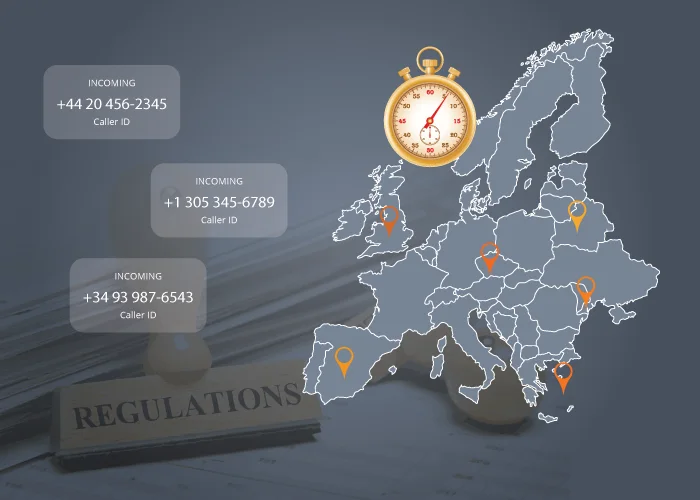
Map of Europe showing international caller ID routing and telecom regulation blocks.

Key European Markets & Measures to Watch

Many countries have already implemented blocking rules, and others are moving in the same direction. Some countries actively block non-verified domestic CLIs on international calls, others suppress the caller ID, and several impose financial disincentives rather than outright bans.

For instance, driven by ECC Recommendation (23)03, European regulators are now requiring carriers to block or suppress national E.164 numbers when calls originate abroad unless they are fully verified.

What’s consistent is the direction of travel: domestic caller ID must align with domestic origination—or be properly verified.

For global businesses, understanding why your calls are being blocked, which countries already enforce these rules, and which are preparing new measures, is essential to prevent call failures, blocking, or unexpected surcharges across Europe.

Below is a breakdown of markets already impacted, those with upcoming crackdowns, and countries expected to follow next.

Note: We’ll list all resources below for additional reading.

1. Countries Where Roll-Out Happened Recently

These European markets already enforce restrictions on incoming international calls that display a national CLI:

  • United Kingdom: The regulator Ofcom now requires operators to block international calls displaying a UK number (CLI), except in limited, legitimate cases like roaming or properly verified UK-origin calls.
  • Belgium: Under the 2024 spoofing Royal Decree of BIPT, international calls using a Belgian number that terminate in Belgium must be blocked.
  • Czech Republic: The Czech Telecommunication Office (CTU) has introduced new measures restricting the use of Czech CLIs on international routes. The CTU also adopted anti-spoofing rules in July 2024. Any call showing a Czech number must originate on national networks; international calls attempting to present a Czech CLI are blocked.
  • Malta: Malta also has new blocking measures for incoming international calls, with a national CLI entered into force in 2024.
  • France: France implemented STIR/SHAKEN for voice calls using national fixed numbers in October 2024, enhancing the authentication of domestic CLIs and reducing the risk of spoofed in-country caller IDs entering the network.

2. Countries Where It May Happen Soon

Europe-wide research shows that many regulators are preparing additional anti-spoofing measures. Because new rules must be notified to the Body of European Regulators for Electronic Communications (BEREC), more national policies are expected in the coming years:

  • Italy: In May 2025, Italy’s telecom regulator, AGCOM, approved a new regulation to block international spoofing calls from abroad. Foreign number calls presenting an Italian caller ID must be blocked. Any call from an Italian number to another Italian number must pass through national routes.
  • Finland: A major operator, Elisa Oyj, developed and deployed a technical solution to block CLI spoofing in Nov 2025, supported by decisions from the national regulator Traficom. Finnish authorities have increased monitoring of spoofing and are considering EU-aligned measures requiring stricter CLI verification on inbound international traffic.
  • Spain: In February 2025, Spain introduced rules requiring operators to block calls and messages showing a Spanish caller ID if the traffic originates abroad or uses an unauthorized CLI.
  • Romania: National regulator ANCOM in Romania has ordered operators to block international calls that falsely show certain national numbers, effective July 2025.
  • Poland: Poland introduced new rules in October 2024 requiring operators to add technology that monitors traffic and blocks suspicious calls within the next 6 to 12 months. Calls between Polish numbers must remain on Polish national networks; foreign-origin calls showing a Polish CLI are blocked.

3. Other European Countries to Monitor

Even where full blocking is not yet enforced, carriers in countries like Germany, Austria, Portugal, and others are deploying advanced filtering and anti-fraud systems. Calls that previously connected may now experience inconsistent delivery or an altered caller ID.

Any European country that has not yet imposed strict blocks is likely to do so in the near future, as this is a regional directive stemming from the European Conference of Postal and Telecommunications Administrations (CEPT).

For example, Germany is under the same pressure from both EU guidance and local fraud risk to protect their citizens. Bundesnetzagentur put into force new rules to prevent number spoofing in Germany. Austria and Portugal are taking steps to address rising phone fraud as well. Portugal has noted a rise in number spoofing, while Austrian operators like A1 are implementing advanced anti-fraud technologies.

Growing Trend: Surcharges Instead of Full Blocking

Europe is becoming much stricter about using local caller IDs on calls that come from outside the country. If regulators are not fully blocking these calls, they are adding high extra charges to discourage the practice. Effective 1 July 2025, several European countries have introduced surcharges on domestic fixed CLIs delivered over international routes, including Greece, Denmark, Cyprus, Bulgaria, Hungary, Slovakia, and Lithuania.

These surcharges don’t ban local CLIs but make it too expensive to send a domestic caller ID over international routes, which pushes businesses to use proper local routing instead.

For global teams, this makes local termination and Local 2-Way Voice increasingly essential. By terminating calls inside the country using local routes and verified local outbound calling numbers, businesses can avoid surcharges, maintain proper caller ID display, and stay fully aligned with emerging European regulations.

What This Means for Global Sales, Support & Operations Teams

The European crackdown on in-country CLI via international routes is not just a compliance issue; it also affects revenue and customer experience. Global teams need to adjust their global voice strategies.

  • For Sales and Support Teams
    Teams that rely on caller ID management to improve answer rates may experience more blocked or incomplete calls as European carriers filter non-verified CLIs. Blocking of non-compliant calls directly leads to failed customer contacts and lower connection rates. Agents spend more time re-dialing or dealing with frustrated customers. Using verified local numbers and compliant termination routes becomes essential to maintaining reliable outreach.
  • For Operations and IT Teams
    IT and operations teams now face complex compliance burdens. Relying on carriers that utilize non-compliant international routes introduces sudden service outages and unpredictable blocking. The long-term stability of the voice service is compromised, requiring immediate vendor evaluation. IT teams also need clearer visibility into routing paths and the ability to adapt quickly as new restrictions take effect.
  • For VoIP and Global Providers
    The shift away from domestic CLI over international routes requires providers to update their service models. This includes expanding access to local outbound calling, strengthening CLI verification processes, and ensuring termination complies with country-level rules. Providers that can deliver legitimate local presence with regulatory alignment will become the preferred choice for global businesses navigating Europe’s evolving voice landscape.

How to Stay Compliant and Competitive

As more European countries enforce rules around in-country caller ID, global businesses need a compliance-focused approach to maintain call deliverability and customer trust. The goal is to ensure that outbound calls to Europe follow national regulations, present accurate caller identity, and use routes that carriers will accept. Here is an actionable framework for decision-makers:

  1. Choose a Provider With Regional and Regulatory Expertise
    Working with a global telephony provider that understands European voice regulations is essential. This includes telephony partners that use verified routing, comply with national numbering rules, and have visibility into how each country handles domestic caller ID on international traffic.
  2. Use Local Termination Numbers (Local 2-Way Voice)
    As more countries block domestic CLIs on international routes, businesses must use a true local presence. The Local 2-Way Voice solution from Global Call Forwarding provides legitimate local outbound calling in many European markets, allowing your teams to display a verified local phone number while maintaining compliance.
  3. Verify and Test Caller ID Regularly
    Test how your caller ID displays across major European networks. This ensures your outbound calls use the correct number format and remain compliant as carriers update their filtering rules.
  4. Monitor Regulations and Adapt Quickly
    European CLI rules continue to evolve. Staying compliant requires proactive monitoring and the ability to adjust routing as new restrictions appear. Providers who track regulatory compliance changes can help prevent sudden call failures.

Questions Decision-Makers Should Consider

  • What number formats am I using for outbound calls in Europe?
  • Are any domestic CLIs being presented over international routes?
  • Is my provider using verified, compliant termination routes?
  • Do I have visibility into call blocking or failure rates by country?
  • What is my plan if a country enforces new CLI blocking tomorrow?

How Can Global Call Forwarding Help?

Europe’s call authentication rules are changing fast, and businesses that rely on domestic caller ID over international routes must adapt. Instead of risking blocked calls or rising surcharges, international companies across IT, tech, SaaS, and other industries need compliant local solutions that maintain trust and deliverability.

With decades of experience in global voice services, Global Call Forwarding monitors regulatory updates across Europe and adjusts global voice solutions to protect call quality and compliance. We help international teams stay ahead of these changes.

We bring to you compliant local phone numbers, verified outbound caller ID, and Local 2-Way Voice, which enables true local presence calling in many European markets. This ensures your caller ID displays correctly, your calls follow national regulations, and your teams maintain consistent reachability across Europe.

To strengthen your European voice infrastructure and ensure your CLI practices meet evolving regulations, contact Global Call Forwarding. Our team is here to help you stay compliant, reliable, and competitive in every European market you serve.

Official Regulatory Sources & Further Reading:
  • https://www.ofcom.org.uk/siteassets/resources/documents/phones-telecoms-and-internet/information-for-industry/scams/calling-line-identification-cli-authentication-assessment-and-future-roadmap
  • https://www.bipt.be/operators/telecommunications/consumer-protection/royal-decree-on-spoofing
  • https://ctu.gov.cz/en/press-release%3A-first-anti-spoofing-measures-force-1-june
  • https://www.mca.org.mt/node/8289
  • https://www.telecompaper.com/news/italian-operators-ordered-to-block-international-spoofing-calls–1536967
  • https://www.prnewswire.co.uk/news-releases/finnish-innovation-stops-scam-calls–rest-of-europe-is-following-the-example-302626770.html
  • https://www.romania-insider.com/romanian-communications-watchdog-block-deceptive-calls-2025
  • https://www.dataguidance.com/news/poland-ministry-digitization-announced-new-rules

Consecutive Virtual Phone Numbers: The Complete Business Guide

As global teams scale sales, support, and regional operations, many businesses look for ways to organize their phone systems more efficiently. One solution that often gets overlooked but delivers huge operational value is using consecutive phone numbers or sequential phone number ranges.

Global Call Forwarding can provide consecutive virtual number ranges in select countries, supporting businesses across industries such as SaaS, travel, finance, outsourced contact centers, and global enterprise support teams. This gives companies a structured, professional, and easy-to-manage communication setup.

Here’s what they are, how they work, and the use cases where they shine.

Consecutive Phone Numbers: What are They and How They Work

Consecutive phone numbers are multiple business phone numbers issued in a sequential block, so the final digits appear in numerical order, such as …2234, …2235, …2236, etc. These ranges are sometimes referred to as sequential DID ranges or number blocks.

Carriers allocate these sequential virtual phone numbers under the same prefix or area code. Consecutive numbers are typically purchased in groups and assigned across departments or teams. They can be used to organize incoming calls and give businesses a unified presence.

With coverage in 160+ countries and deep carrier relationships, Global Call Forwarding is able to secure consecutive virtual phone number ranges in many regions where other providers have limited inventory. We can get you set up with sequential number ranges from 65+ countries, including the US, UK, Philippines, Switzerland, Poland, Ireland, Brazil, and more.

Why Businesses Use Consecutive Virtual Numbers?

There are a few different benefits to purchasing and using a range of consecutive virtual phone numbers to manage your inbound and outbound communications:

1. Professionalism & Brand Consistency

A structured numbering system makes your organization look unified and credible. Customers can immediately recognize that different numbers belong to the same company. For example: Sales team phone number ending in 4181 and Support team phone number ending in 4182.

2. Easier Internal Management

Consecutive phone numbers simplify operational tasks such as:

  • Managing routing and extensions
  • Tagging phone numbers by department
  • Tracking performance by number or range
  • Organizing campaigns or regional hotlines

Combine these with Custom Reports and you get a much easier look into which lines generate traffic, conversions, or support volume.

3. Better Customer Experience

Customers may trust numbers that appear consistent. Outbound calls from similar numbers tend to see higher recognition and pickup rates.

4. Built to Scale With Global Operations

As your team grows, consecutive virtual number ranges make it easy to add new numbers in sequence, making them ideal for:

  • Distributed sales teams
  • Regional or service-based lines
  • Seasonal hiring or expansion
  • Multilingual support centers

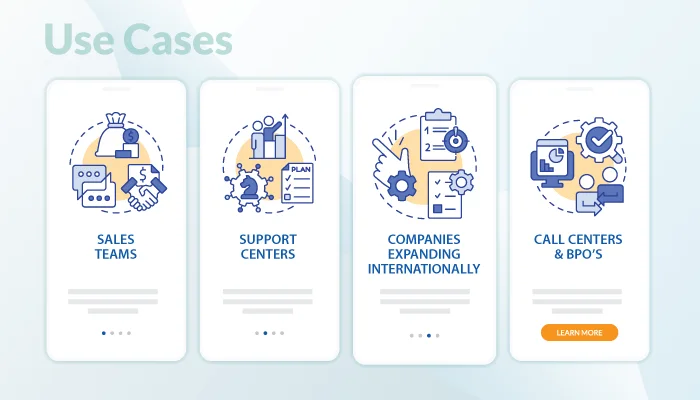
Four key business use cases for consecutive number ranges: Sales, Support, International Expansion, and BPOs.

Use Cases for Consecutive Virtual Phone Numbers

When used strategically, consecutive phone numbers can streamline team organization, simplify reporting, and strengthen regional presence.

Below are practical use cases across industries and regions—including APAC, Europe, North America, and the Middle East—that show how different departments and global teams benefit from sequential number ranges:

1. Sales Teams With Multiple Representatives

Sales organizations often rely on individualized phone numbers for outbound prospecting, regional coverage, and account ownership. Consecutive number ranges create an organized system where each representative or hunt group receives a unique but related number. This makes it easier to manage territories, track performance, and maintain consistency across outbound campaigns.

Marketing and sales teams can also track campaign performance by assigning specific sequences to new projects, campaigns, or regions.

2. Global Support Centers

Support teams often juggle multiple tiers, such as general inquiries, technical support, billing queries, and VIP or enterprise support. Consecutive phone numbers help structure these tiers by allocating specific ranges to each team, ensuring that inbound calls route correctly and internal escalations flow seamlessly.

Use sequential phone number ranges to divide teams clearly and simplify routing, creating more predictable and load-balanced paths for customers and agents. For example:

  • General support → 3000–3099
  • Technical support → 3100–3199
  • VIP or enterprise support → 3200–3299.

This makes it easier to scale support operations across time zones, languages, and growing customer bases.

3. Call Centers & BPOs

Call centers, BPOs, and outsourced customer experience providers—especially those serving industries like e-commerce, healthcare, travel, and finance—often manage high call volumes, multiple teams, and diverse client needs, making structure essential. Consecutive virtual number ranges allow these organizations to assign clean, predictable blocks of numbers to different campaigns, client accounts, or agent groups.

This makes them ideal for large centers managing:

  • Overflow routing
  • Agent groups
  • KPIs by number or department
  • Multiple clients (with phone number tagging for each account)
  • Cleaner reporting (quickly identify call performance by number or number range)

4. Multi-Department Organizations

In companies with multiple departments—such as Finance, HR, Billing, Customer Success, and Marketing—consecutive number blocks help maintain structure as teams grow or change. Assigning each department its own sequential range creates a predictable framework for call routing, internal documentation, and performance tracking.

This structure is especially useful in industries such as professional services, logistics, banking, and SaaS platforms, where departments rely heavily on clean call routing and audit-friendly reporting.

Managers can easily review call activity by department, adjust handling strategies, or add new numbers in sequence as staffing needs evolve.

5. Companies Expanding Internationally

When expanding into new regions—whether APAC, the EU, LATAM, or the Middle East—businesses can use consecutive virtual phone numbers to build local teams and establish a credible in-country presence. A range of local consecutive virtual numbers helps:

Customers often feel more confident when they recognize a familiar prefix and numbering style. And managers can compare performance across regions and optimize their global communication strategy with clarity and consistency.

Benefits of Consecutive Numbers With Global Call Forwarding

Consecutive virtual phone number ranges become even more powerful when paired with global coverage, advanced call routing tools, and flexible configuration options from Global Call Forwarding.

Beyond simply securing a number block, businesses gain a fully managed communication system designed to scale with their teams. Here’s what makes Global Call Forwarding uniquely equipped to support consecutive numbers:

1. Global Country Availability — We have a large inventory of regions where consecutive phone number ranges can be provided. Our carrier network and regulatory expertise help simplify the request process, even in more complex or hard-to-reach markets, such as, Zimbabwe, Trinidad and Tobago, Slovakia, Latvia, Burkina Faso, etc.

2. Advanced Routing & Call Handling Included — Each virtual phone number in your range gives you access to advanced call management features:

  • IVR and advanced call routing
  • Time-of-day and location-based routing
  • Failover and backup routing
  • Phone number tagging for easy organization
  • Call recording and advanced analytics, and many more.

3. Easy Management Through an Online Dashboard

You can organize and manage phone numbers by team, region, or purpose, making reporting and administration much simpler. View call activity, generate and schedule new reports, or use AI-driven insights to better understand call traffic and optimize accordingly—all from a centralized platform.

4. AI Call Insights for Sequential Phone Number Ranges

Run AI-powered analytics across your entire range:

  • Call summaries
  • Recording and transcripts
  • Sentiment analysis
  • Keyword search in transcripts
  • Team or region performance comparisons

These insights are especially valuable for industries with strict compliance, SLA, or service-level reporting requirements, such as healthcare, finance, travel, logistics, and technical support organizations.

How to Get Consecutive Phone Numbers From Global Call Forwarding

Availability varies by country and type, but Global Call Forwarding offers one of the broadest coverage of consecutive virtual numbers across North America, Europe, Asia-Pacific, and the Middle East.

Because consecutive phone number ranges depend on country and carrier availability and local telecom rules, our process is straightforward:

  1. Contact our sales team or submit a request on our website.
  2. Share the country, number type, and range size you need.

Our team checks availability and presents nearby or exact-range options. Once approved, we provision your numbers; some ranges activate instantly while others may require KYC documentation. After activation, you can immediately begin forwarding calls worldwide and setting up advanced configuration.

Bring Structure and Scalability to Your Global Phone System

Consecutive phone numbers offer clarity, professionalism, and scalability, especially for growing teams handling international sales, support, or high-volume communication.

As a global cloud telephony provider serving businesses in 160+ countries, Global Call Forwarding can help you secure the right consecutive virtual phone number range for local, national, or toll-free needs. Once set up, you can then configure different features to optimize and streamline communication across the phone number range.

Ready to request consecutive virtual phone numbers? We can get you set up with sequential phone number ranges from over 65 countries.

Contact our team or chat with us online to check availability in your target country.

France Phone Number Guide: An Explainer

A France phone number is a cost-effective way of growing in or entering the thriving French market.

You can build and foster relationships with current and potential clients. Plus, receive calls from these clients on multiple phone lines—VoIP, mobile, and landline.

And with a cloud-based phone system, you can scale your telephony system based on your business needs.

In our France phone number guide, learn about French virtual numbers, different number types, and formats.

Let’s see how using a local phone number helps boost business.

Guide to Phone Numbers in France

Obtaining a France phone number can help in creating a local presence and connecting with French clients.

One of the biggest advantages is that customers can call you at affordable local rates or even for free, depending on the number type you choose to use. Our France phone number guide will help you make the choice.

Businesses with familiar local codes gain trust, leading to increased support and engagement. Further, you can amplify brand visibility and customer recall with local numbers.

If you are thinking about purchasing a French number, read our article on how to get a business number in France.

France Phone Number Plan

The Autorité de Régulation des Communications Électroniques et des Postes (ARCEP) is the authority overseeing and managing France’s telecom sector. They take care of the country’s phone numbering system, making sure rules and standards are followed.

Telecom operators in France provide a plethora of offerings, from voice calls to data services, useful for businesses and service providers.

You can also explore virtual phone services that come with comprehensive features, such as call routing, call recording, and call forwarding, suitable for all business types.

In fact, Global Call Forwarding offers many of these features and more with our France virtual numbers.

Different Types of France Phone Numbers

The country code for France is ‘+33.’ All France phone numbers have 10 digits:

  • starting with the trunk prefix ‘0,’
  • followed by the area or toll-free code,
  • and a 7-8-digit-long subscriber number.

A standard France phone number looks like this: +33 0x xx-xx-xx-xx.

A strategic use of different number types can facilitate communication and help meet customer expectations in the French market and network with local clients.

Let’s understand these number types.

1. France Toll-Free Numbers

France toll-free numbers are a valuable conduit for French callers to reach your business free of cost. They appear as local toll-free numbers used in France with ‘0800’ and ‘0805’ prefixes.

Because these numbers work virtually, you can operate your business in the country from anywhere in the world and simply forward incoming calls to where your teams are located.

The standard France toll-free number format is +33 (0800) (xxx-xxx).

There are many perks to using a toll-free number:

  • Encourage interactions between global businesses and French consumers
  • Support real-time engagement
  • Enable you to test the market without physically being there.

Many service providers offer features like IVR, call recording, and geographic routing with their virtual toll-free numbers. This makes the toll-free numbers extra functional.

2. France Local or Geographic Numbers

Geographic numbers are region-specific and accessible at standard local calling rates.

If your business has a target audience in a specific French region, then having a local number allows you to tailor communication strategies and services to that area.

France is geographically divided into five main regions: Paris, North-West, North-East, South-East, and South-West.

Most providers include local numbers for major French cities and regions like:

  • Lyon (487)
  • Marseille (484)
  • Nice (422)
  • Paris (187)
  • Toulouse (532), and so on.

The standard France local number format is +33 01 xx-xx-xx-xx.
*The area code for Paris is 1.

Global Call Forwarding also offers France geographic and national numbers with Local 2-Way Voice. Use these numbers and display local, in-country caller IDs to place outbound calls to your customers in France and increase response and callback rates.

3. France National Numbers

National or non-geographic numbers are linked to an entire country instead of specific regions. So you can use these numbers to establish a presence beyond particular French cities.

Calls made to national numbers typically incur local calling rates, making them cost-effective for your callers.

A France national phone number starts with the prefix ‘9’ followed by an 8-digit subscriber number.

The standard France national number format is +33 09 71 xx-xx-xx.

Global Call Forwarding offers France national numbers with the ‘97’ prefix.

Related: Geographic Versus Non-Geographic Numbers

4. France Mobile Numbers

Mobile phones are ubiquitous, and therefore, you can reach a broader audience with mobile numbers.

France mobile numbers start with prefixes ‘6’ or ‘7’ (mobile services code) followed by the 8-digit unique subscriber number.

The standard France mobile number format is +33 6 xx-xx-xx-xx.

Get a France Phone Number with Global Call Forwarding

Use our France phone number guide to take your business to new heights and establish yourself globally. Get a French number and make your business a cross-border success!

We can help you choose the right type of number to operate in France.

With early French roots, Global Call Forwarding has been a pioneer in the telecom industry since 1996, and we offer dynamic telecom solutions to transform business communications throughout France.

02 Numbers – the Gold Standard for Bangkok Businesses

A few years ago, at iFX Expo Asia, I had several conversations with sales and support leaders from Hong Kong and Malaysia-based forex companies.

They were curious about Bangkok 02 numbers and whether we, at Global Call Forwarding, offered these numbers. They noted that prospects and customers within Thailand demonstrate a higher receptiveness to calls from 02 numbers.

That conversation highlighted what many companies in Thailand and Southeast Asia already understand. An 02 phone number is a business asset rather than merely a contact number. People see 02 fixed-line numbers as more reliable and professional than mobile numbers.

From finance and insurance to travel and hospitality, companies in Thailand’s capital rely on 02 numbers to establish a local presence and drive response rates—often regarding 02 numbers as the “Gold Standard for Bangkok’s Business.”

In this article, we’ll look at:

What is an 02 Number?

02 is the official landline area code for Bangkok. An 02 number is a local Thailand phone number used by businesses and residents in the country’s capital.

As the country’s business epicenter, Bangkok—a megacity and primate city—dominates the economy, overshadowing other cities in size and financial contribution.

Businesses with an 02 number convey a physical and credible presence in the heart of Thailand’s business ecosystem.

Format of 02 Bangkok Number: 02-xxx-xxxx

  • 02 is the area code for Bangkok.
  • XXX-XXXX is the 7-digit subscriber number unique to each business or individual.

Who Uses 02 Numbers?

Across Bangkok, 02 numbers are prominently displayed in ads, used as sales hotlines, and listed for emergency support. Industries, including travel, banking, insurance, and government, use 02 Bangkok numbers to establish credibility and trust. Examples include:

Thailand companies that use 02 phone numbers

An 02 number from Bangkok shows an organization’s authenticity and reach in Thailand’s most competitive and well-known market. People generally associate numbers starting with 08 or 09 with small businesses. However, they do not offer the same level of credibility as a local 02 number.

Why Should Your Business Use a Local Bangkok Phone Number (02)

Expanding into Thailand’s business environment requires a local presence. A local Bangkok number with the 02 area code allows your company to connect with customers and partners without the need for a physical office in Thailand.

Here’s why a virtual Bangkok (02) number is a smart and strategic choice for your business:

  • Shows Professional Image
    A virtual Bangkok local number allows your business to operate in the heart of Thailand’s capital, without actually being present there. The number gives you a local identity, helping increase business visibility and build trust with Thai customers and businesses who prefer dealing with local contacts.
  • Offers a Cost-Effective Market Entry
    Setting up a local office in Bangkok can be costly and time-consuming. A virtual number allows your business to enter the Thai market without upfront investment in office infrastructure. You can begin operations immediately, test market potential, and expand based on results.
  • Meet Thai Business and Regulatory Expectations
    Many Thai government institutions ask for a local phone number when businesses register. A virtual Bangkok number meets this requirement, enabling you to fulfill official expectations and establish a legitimate presence in the region.
  • Drive Better Results in Marketing Performance
    Using a Bangkok (02) number in sales and marketing campaigns boosts local trust, increases call response rates, and improves conversions. It helps your business appear locally accessible, improves ad ROI, and allows tracking of campaign performance.
  • Access Features for Smart Call Management
    Unlike traditional landlines, virtual Bangkok numbers offer access to cloud-based features, including call transcription, translation, IVR, time-of-day routing, call recording, etc. These features help optimize communications and ensure seamless customer support.

Evolving Telephony Capabilities in Thailand

Global Call Forwarding has significantly improved its capabilities in Thailand, offering a more reliable solution for businesses seeking to establish a presence in Bangkok. Previously our capabilities for Thailand coverage were limited: we lacked local termination in Thailand and so could provide 02 numbers for incoming calls only.

Additionally, Southeast Asia was changing compliance rules that mandated businesses to ensure caller ID met specific standards when using international routes.

With our Local 2-Way Voice solution, we have now established local, in-country calling routes. This allows us to route calls through local networks, ensuring low latency and high-quality voice. Our customers can reliably make outbound calls with a guaranteed +66 (0) 2 caller ID.

We’ve expanded this coverage to include other Thai area codes, such as 052 for Chiang Mai.

Your First Step to Building Trust in Thailand and Southeast Asia

Regardless of the scale or scope of your business goals in Thailand, an 02 number is important for establishing a trustworthy and professional brand image.

A Bangkok (02) number can help startups and entrepreneurs establish a credible local presence. It supports business legitimacy, enhances customer trust, and allows you to appear professionally rooted in Thailand.

For larger organizations or global brands planning to build a regional hub in Southeast Asia or expand in-country operations in Thailand, 02 numbers play an even more strategic role. These numbers make it easier to build local relationships and increase brand trust.

By using local caller IDs, your business can communicate more effectively with clients, partners, and suppliers.

We’ve had an APAC Regional Office in Bangkok since 2016, offering dedicated support, onboarding, and localized service. We have a deep understanding of the complex telecom landscape in Southeast Asia.

Contact us now to learn more or get your local Bangkok phone number today!

How to Add Global Coverage to Your Business Phone System

Today’s most competitive businesses aren’t just thinking local — they’re building for global. From APAC to the Middle East and Africa, the opportunity to scale customer support and sales reach across borders has never been greater. Advanced technology makes it easier than ever to expand your business internationally without increasing overhead costs. And with the rise in cost-effective telecom solutions, businesses are able to enter markets where numbers and phone services are generally harder to get.

But international expansion comes with communication challenges that traditional phone providers often aren’t equipped to solve.

That’s where global telephony providers like Global Call Forwarding come into the picture. We can help you add global coverage to your business phone system with international phone numbers and advanced call features. See how you can extend coverage into niche and hard-to-reach regions — without requiring a complete system overhaul with us.

Building a Global Communication System

Global telephony providers offer cloud communication solutions such as voice, messaging, phone numbers, and call management tools. And since these services work over the internet, businesses can use them to communicate with customers in different countries and regions worldwide.

In most cases, your business does not even need to open a new office or physical location in these countries. You simply forward calls internationally or communicate via web apps.

So, how do you add global voice coverage to your business phone system without dramatically increasing overhead costs?

  1. Purchase international phone numbers for target countries.
  2. Work closely with your phone service provider to manage phone service in hard-to-reach countries.
  3. Set up international call forwarding to have incoming calls routed to the right department and office anywhere in the world.
  4. Use outbound calling with caller ID management when making outgoing calls to customers in target countries.

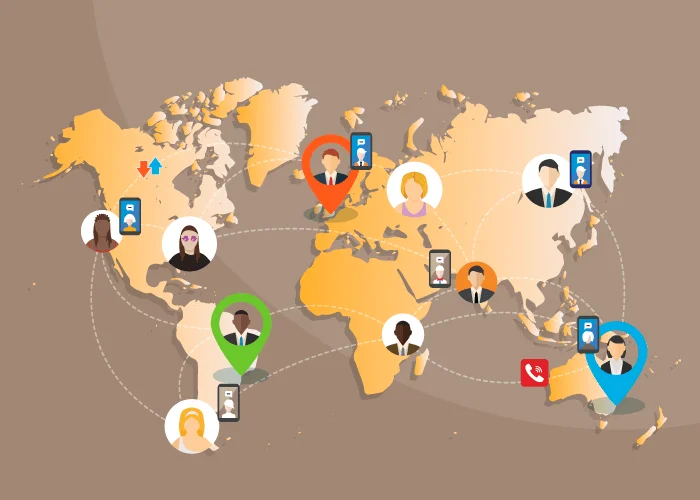
This image shows a phone system with global voice coverage.

Increasing Global Phone Coverage with Global Call Forwarding

While many providers limit their phone number availability to North America and Western Europe, the most dynamic growth is often happening elsewhere — in regions like Latin America, APAC, and Africa. These regions present unique barriers: regulatory complexity, limited Tier 1 carrier access, and stricter documentation requirements.

So, how can your business get around this problem? Work with a global telephony provider that offers high-quality voice service and extensive network of local telecom partners.

Having been in telecom for more than 29 years, Global Call Forwarding has long-term relationships with trusted Tier 1 Carriers worldwide. This allows us to provide our customers with one of the widest offerings available on the market.

New players in this space do not specialize in this area of the telecom industry. So, the numbers they provide may be more limited, come with stricter documentation requirements, or take longer to activate.

Due to our positive reputation in the industry and the trusted relationships built with our providers, we offer our customers phone numbers with fewer documentation requirements than other providers and at competitive rates. And we provide added flexibility with our month-to-month billing and no long-term commitments – which our customers prefer over the strict contracts required by many telecom providers.

Using Our Service with Other Providers

Since some global phone providers have limited coverage and require stricter documentation for most originations, they may be harder to work with. But that does not mean you need to find a new phone service if your communication system is already built with other providers.

You can simply integrate our services and hard-to-reach international numbers with other providers like Zoom Phone, Amazon Connect, Genesys, Webex, MS Teams, and so on. Our team of global communication experts can help you identify and set up the right solutions.

Global Call Forwarding (run by United World Telecom) has an extensive inventory of phone numbers from over 160 countries around the world. And we can provide phone service in hard-to-reach countries as well. So, your business can use our service to add global voice coverage to your existing phone system reliably.

Unlike many global UCaaS providers, our network includes regional relationships and regulatory expertise in:

  • Latin America: Countries like Brazil, Argentina, Peru, Colombia
  • Middle East & Africa (MEA): UAE, Saudi Arabia, Egypt, Nigeria, Kenya
  • Asia-Pacific (APAC): Indonesia, Vietnam, the Philippines, India

View the available countries we offer service for on our Country Coverage page.

Many competitors don’t support these markets — or only offer limited inbound service.

Global Call Forwarding gives you access to toll-free and local numbers with fewer documentation requirements, faster activation, and high-quality call delivery. All backed by long-standing relationships with trusted in-country providers and Tier 1 carriers.

Adding Global Coverage with Global Call Forwarding

Already using a cloud communications or PBX platform like Zoom Phone, MS Teams, Amazon Connect, or Genesys? You don’t need to rip and replace your entire setup.

Global Call Forwarding makes it easy to layer on global coverage using two flexible methods:

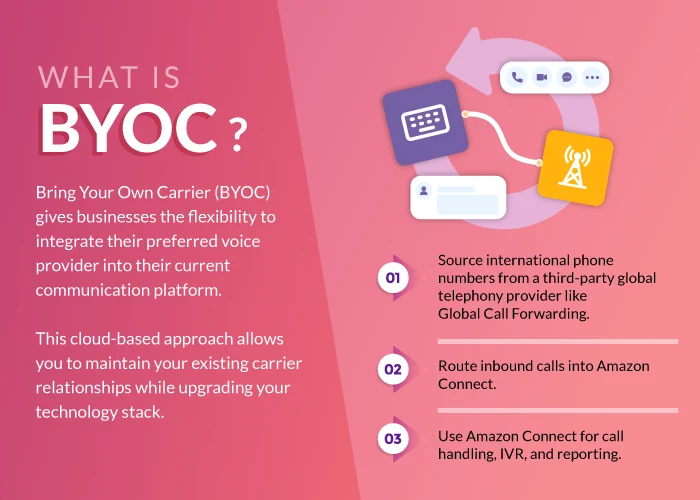
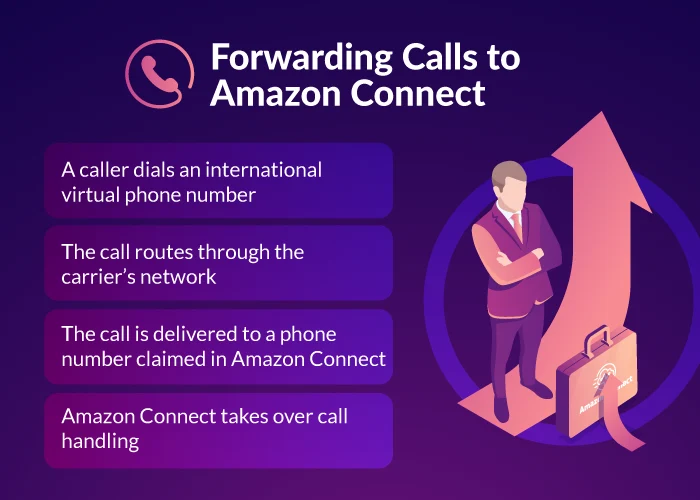
1. Add Global Coverage with BYOC

BYOC solutions let you forward calls directly to SIP. This is the best option for businesses that want to add numbers to an existing PBX system and/or have limited minutes. You can simply buy numbers from us and forward calls to your PBX. Here’s how:

  1. Buy international phone numbers from Global Call Forwarding and activate your service.
  2. Contact your PBX or phone service provider.
  3. Give your PBX or phone service provider the list of phone numbers and our list of IP addresses. They must whitelist these so you can receive calls.
  4. Your PBX provider will then create a special SIP domain for each number
  5. Add this SIP domain in your control panel under Forward all calls to, so we can forward calls to the right domains.

This way, we’ll route calls directly to your PBX via SIP and your business can use your own infrastructure while leveraging our global reach.

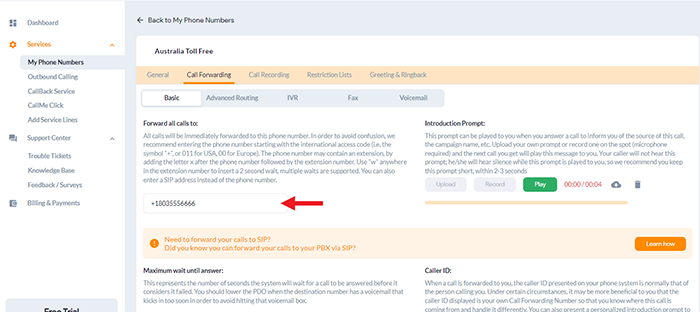
forward to your number

2. Add Global Coverage by Forwarding Directly to Your Existing Number

Need a simpler option? You can purchase global phone numbers from Global Call Forwarding and forward calls to an existing local number or call center line. No SIP integration or whitelisting required.

This is the best option if you have an unmetered plan with your local phone number provider. And you avoid the hassle of dealing with SIP domains and whitelisting IP addresses. You can do this on our Pricing page.

Integrate with the Tools You Already Use

Whether you’re using a contact center platform, CRM, helpdesk, or voice AI tool, our services are designed to integrate seamlessly.

  • CRMs: Salesforce, Zoho, HubSpot, Pipedrive
  • Help Desk Software: Zendesk, Freshdesk, Intercom
  • Voice platforms: Genesys, Amazon Connect, MS Teams, Zoom Phone

This lets your team deliver more personalized, responsive customer interactions — no matter where your customers are.

Challenges to Keep in Mind

Most global phone service providers offer international phone numbers and various cloud communication features. But, they may come with limitations that can impede your business’ global expansion plans:

Limited global coverage
Worldwide coverage is typically limited to just Western Europe and the Americas. This means that providers may not have a strong presence in the Middle East, Latin America, or Africa. So, if you have customers in these regions or want to expand, you will need an additional phone service provider.

For instance: Zoom Phone offers phone numbers in 45 countries and toll-free service in only 29 countries (of which some are inbound-only). You can get around this with a Zoom Phone BYOC solution.

Amazon Connect offers phone numbers and inbound calling from about 80 countries, DID and toll-free numbers in nearly 20 countries, and outbound calling for 200 countries.

Stricter documentation
Additionally, new players in the telecom space may require stricter documentation for most originations. This could be a result of short-term experience, smaller networks, different business models, and so on. But it can add more roadblocks to your international expansion plans.

Note: Information mentioned in this article is accurate at the time of publishing and may be subject to changes.

Why Choose Global Call Forwarding as Your Global Phone Service Provider?

While there are countless global inbound phone services available, you need one that works best for your business communication needs. Global Call Forwarding has helped thousands of companies expand globally — from high-growth startups to multinational enterprises.

  • Coverage in 160+ countries (including hard-to-reach regions)
  • Local, national, and toll-free numbers available
  • Advanced routing features and real-time analytics
  • Flexible month-to-month pricing
  • Support for BYOC and SIP delivery
  • Dedicated account managers and 24/7 technical support

Ready to add global voice coverage to your phone system? Call us at +1 (561) 908-6171 or chat with our experts online!

What is International Local Presence?

Local presence is one of the most powerful features of our cloud-phone service.

With local presence dialing, agents can connect with between 4-10x more prospects by showing a local number as their caller ID.

Most telephony providers only offer local presence dialing for domestic phone numbers, but we can help your sales and support teams establish a local presence internationally.

How International Local Presence Works

Global Call Forwarding provides local and toll-free numbers from most countries in the world.

These numbers can be used to receive incoming calls and also to make outbound calls with a dedicated caller ID. This means that customers can show a local caller ID for outbound calls that corresponds to the destination they’re calling.

International Local Presence Example

Say, agents are dialing prospects in London. They can show a +44 204 phone number. Or, if they’re calling customers in New York City, they can show a +1 646 phone number. They can do so, no matter their location — India, Australia, Canada, USA, etc.

When to Use Local Presence

Local presence dialing has many potential use cases. Here are some of the times when local presence dialing proves most effective:

The benefits of international local presence dialing.

Benefits of International Local Presence

Cold calling is tough business. With spammers and robocallers on the rise, prospects are less likely than ever to answer cold calls. This is why local presence dialing exists.

Improve Connection Rates

Establishing a local presence is especially important when making international calls. Prospects are far less likely to answer calls from other countries:

The stats above prove that businesses will increase the return on their outbound calling efforts by using local presence dialing. When more people pick up, time spent dialing becomes more profitable, as agents are more likely to have productive conversations.

Route Calls Back to the Right Rep

It’s common knowledge that many inside sales calls go unanswered. This leaves the called party with a missed call notification or a voicemail, along with the number that called them.

International local presence dialing enables agents to show their own local numbers as the caller ID. This means that if the called party returns the call, it will be routed back to the agent that called them.

Types of Local Presence

You can use different types of local presence dialing with Global Call Forwarding:

Call Masking with an International Phone Number

While number masking might have a negative connotation, it is a powerful tool used by businesses around the world. Call masking refers to the technique of “masking” or showing your business phone number for outbound calling.

It helps you keep your actual number private and lets you show a dedicated business phone number instead. You can also use number masking to call internationally with a local phone number.

Using Privately-Owned Numbers

Some companies already have phone numbers that they want to make calls with.

They might already have contracts with existing carriers, but want to use our international voice service to call globally. In most cases, this provides major cost-savings for international calling, in addition to better call quality and stability.

If customers can prove ownership of these phone numbers, we allow them to use these numbers as their Caller ID.

Get Calling With Local Numbers

We would love to help you get started with local presence dialing. Sign up for a local phone number today and start making calls anywhere in the world.

Expand Your Global Voice Coverage with Hard-to-Get Phone Numbers

Part of growing your business means expanding to regions beyond your country. This can come with its own challenges — restricted access, strict investment laws, unreliable phone service, and more.

But with Global Call Forwarding as your business phone provider, you can bypass those challenges and easily enter new markets. Start building your global network of customers, suppliers, and vendors simply by using international virtual numbers.

Voice Coverage Still Matters in Emerging Markets

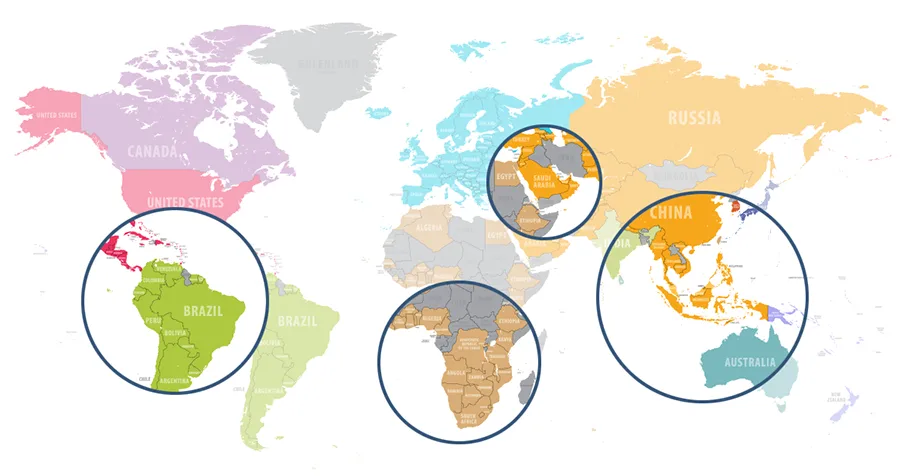
There’s significant potential in emerging markets — specifically, in BRICS (Brazil, Russia, India, China, South Africa) and Next Eleven (N-11) countries (South Korea, Mexico, Indonesia, Turkey, Iran, Egypt, Nigeria, the Philippines, Pakistan, Bangladesh, and Vietnam). These regions are experiencing a wave of economic transformation, supported by demographic shifts, improved mobile infrastructure, and digital advancements.

Phone calls are still a vital and secure means of communication for businesses in these rapidly expanding regions, especially across Latin America, the Middle East, Africa, and Asia. In many of these regions, internet access is limited, unstable, or costly; especially in rural areas, making video calls impractical. Voice networks, on the other hand, are more reliable and widely available, providing immediate communication without requiring a lot of bandwidth.

In markets where digital trust is still growing, a simple phone call can be the key to building credibility and closing deals—important for high-priority conversations in sales, support, finance and healthcare.

However, a significant challenge still exists—many global service providers struggle to offer reliable, high-quality voice connectivity in these regions. This gap in coverage and quality can severely hinder businesses looking to tap into these vibrant markets.

Additionally, some countries aren’t well-established or politically stable. As a result, reliable phone service and global connectivity are hard to come by. This may make it even harder to connect with potential customers or provide necessary services in these regions.

All of this, coupled with a limited-coverage telecom company as your provider, might lead you to miss out on global business opportunities.

Global Call Forwarding Goes Where Others Don’t

Most providers only offer coverage in the USA and Canada. While other services only cover major English-speaking countries like the US, Canada, the UK, and Australia. They fail to provide uninterrupted global voice coverage in other parts of the world, namely Asia-Pacific (APAC) and the Middle East and North Africa (MENA) countries.

map country coverage

As a global IP network owner, Global Call Forwarding can directly connect you to 160+ countries across the world. And our global coverage is not limited to just the US and UK or only English-speaking countries.

We provide reliable voice coverage in over 160 countries, covering more than 90% of the global economy. You can get international phone numbers—local, toll-free, Local 2-Way Voice, national, etc.—in these countries to establish a local virtual presence and use advanced features for all your global telephony needs. This enables you to build trust, improve call pickup rates, and offer 24/7 support across time zones.

We even offer communication solutions and can help you manage global voice coverage in hard-to-reach areas, such as Latin America, the Middle East & Africa (MEA), APAC region, the European Union (EU), remote island territories, and developing economies. Our FlexDial solution works as a regional trigger to make it easy for local customers to contact your business, wherever it is located.

Simply integrate our service with your current phone system, and you’re good to go!

Integrate Global Voice with Your Existing Communication Stack

Whether you’re using a legacy phone system or a modern cloud-based solution, our platform is built for flexibility. You can easily add international phone numbers from Global Call Forwarding to your existing business systems and applications such as CRMs or help desk software like Zoho, Salesforce, HubSpot, Intercom, etc. Similarly, through Bring Your Own Carrier (BYOC) and SIP forwarding, you can connect our reliable global voice network to your preferred PBX system or UCaaS or CCaaS provider like Microsoft Teams, Zoom Phone, etc., maintaining full control of your setup while expanding coverage.

To know more, check out our Integrations and BYOC solutions.

By integrating with us, your business can access a wide range advanced features:

  • Call Forwarding: Effortlessly forward incoming calls worldwide to any landline, mobile, PBX, or SIP address, with the flexibility to update your destination numbers anytime.
  • Advanced Call Routing: Direct calls based on custom preset rules to cover different time zones, locations, departments, or agent shifts.
  • IVR and Auto-Attendant: Design custom call flows for your different phone lines to route callers efficiently through your global phone system.
  • Failover Routing: Maintain business continuity and ensure uninterrupted communication in case of network issues or other crises.
  • AI Call Insights: Analyze call traffic and improve customer interactions through transcripts, summaries, sentiment analysis, and keyword search for efficient call monitoring.
  • Local Caller ID: Make and receive calls using local phone numbers across over 160 countries and increase call answer rates by displaying a local caller ID.

Together, these benefits give you an important competitive edge in emerging areas, increase customer satisfaction, and improve your international operations.

Get Global Phone Solutions Today!

Don’t wait to take your business to the next level. Partner with Global Call Forwarding and gain access to a reliable international voice platform that scales with your business. Whether you are entering to a new market or quickly growing across many continents, our global phone solutions are made to be scalable and grow with your company.

Speak with our telecom experts today! We’re here to help you identify the right communication solution that will meet your needs and budget. To start your international expansion adventure, call us at (561) 908-6171 or chat with us online.

Understanding the UAE Local Numbering Plan

UAE phone numbers, especially those from Dubai with the coveted (04) prefix, are highly sought-after in the global business landscape. Global Call Forwarding receives dozens of requests for Dubai local numbers weekly. We recognize this demand and constantly restock our virtual number inventory with UAE local numbers to meet your business needs.

Let’s explore the UAE numbering plan in our practical guide to UAE phone numbers.

Telephone Numbers in the UAE

Dubai’s meteoric and sustained rise has cemented its status as a major global city and business hub. As one of the fastest-growing cities worldwide, it boasts a thriving economy and a diverse, competitive business environment.

The UAE’s growth trajectory, strategic location, and digitization plans make it an ideal location for businesses seeking expansion in the Middle East. You can enter your business in this fast-growing economy with UAE virtual numbers.

UAE Local Numbering Plan and Format: Understanding the Basics

The telephone numbering plan of the United Arab Emirates is well-structured to ensure efficiency and clarity. UAE phone numbers begin with the country code +971, consisting of eight digits, including the area code. Emergency numbers are three digits and reachable from anywhere in the UAE.

The country follows a closed numbering plan. This means callers in the UAE should dial 0 before a local phone number.

Understanding Area Codes in the UAE

Area codes usually consist of ‘0’ followed by one digit. For example, Dubai’s area code is 04, while Abu Dhabi uses 02 for Abu Dhabi. Familiarize yourself with these area codes to help you better understand UAE local numbers:

  • 02: Abu Dhabi
  • 03: Al Ain
  • 04: Dubai
  • 05: Mobile Numbers
  • 06: Sharjah, Ajman, and Umm al-Quwain
  • 07: Ras Al Khaimah
  • 08: Western Region (Liwa, etc.)
  • 09: Fujairah

UAE Toll-Free Numbers

Metered phone plans in the UAE require subscribers to use credits when making phone calls. UAE toll-free numbers start with 800 and can be dialed for free from mobile phones and landlines within the country. These numbers are an excellent way to improve customer relations and expand your brand presence locally within the country.

UAE National Numbers

These phone numbers are considered “non-geographic numbers” and not local ones in the UAE. National numbers start with +971 600. They are usually reachable from mobile phones, landlines, and other countries.

Dubai Local Numbers: Your Connection to a Global Trade Hub

Dubai is a central hub for global trade, finance, and innovation. Your business gains direct access to this dynamic market by using Dubai virtual numbers. Dubai local numbers, starting with the area code (04), enable you to establish a virtual presence in the city while managing calls from any global location.

Dubai local number format: 971 (04) xxx-xxxx

How to Get a UAE Local Number: A Simple Guide

Acquiring a local number is essential to integrate your business operations within the UAE. Learn how to get started:

  1. Choose a UAE Call Forwarding Provider: Select a provider that offers reliable virtual number services in the UAE. Most cloud phone service providers only offer numbers in major countries. Global Call Forwarding partners with local operators and tier-1 carriers to ensure comprehensive, reliable, and high-quality coverage in the UAE.
  2. Purchase a UAE Phone Number: We offer various plans to suit your business needs, starting at $67.95 monthly and a 15-day free trial. Our plans include advanced features to enhance your communication capabilities. UAE-based company directors have praised our flexibility and dedicated customer service.

The Role of TDRA in UAE Telecommunications

The TDRA oversees and regulates the telecommunications sector in the UAE. It ensures competition, quality of service, and the efficient allocation of numbers. Understanding TDRA’s regulations and compliance requirements is crucial for businesses using UAE phone numbers.

Enhancing Business Communication With UAE Local Phone Numbers

Understanding local phone numbers within the context of international calling is key for companies operating in the UAE. This knowledge can help executives with targeted marketing and establishing a more localized presence in specific Emirates.

To learn more about local phone number options for the United Arab Emirates, talk to our team of experts.

7 Reasons to Get an International 800 Number

An international 800 number can help your business gain more credibility, improve customer satisfaction, and boost overall sales. This article features 7 reasons why you should get international toll free numbers for your business. Read on to learn more.

What Are the Benefits of Getting an International 800 Number?

International 800 numbers — also known as international toll free numbers or ITFNs — are toll free numbers assigned to different countries. Calls made to these numbers are forwarded to representatives in different countries or locations for answering.

Residents and contacts within those countries can call the number for free. While incoming calls to the recipient (your business) are forwarded to your country or another location as desired. Say your UK business has an Australia international 800 number. Australian residents can call this number for free and calls are then automatically routed to your office in the UK.

international 800 numbers

So, how can 800 numbers benefit your business? Here is a look at the top advantages.

1. Offer Customers a Free Calling Option

With an international 800 number, your international customers and contacts have the option to call your business for free. Being given easy access to connect with a business greatly increases the chances of customer engagement. Whether it is to inquire about a new product, plan a partnership, or receive customer support, individuals will hesitate less when calling a business with a toll free number.

2. Improve Your Company’s Professional Image

800 toll free numbers have a reputation. For years, small businesses and large corporations have used these business numbers to make customer calling simple. Toll free numbers are associated with large and established corporations that care for their customers. And so, getting an 800 number improves your professional image as a business that’s established and customer-focused.

3. Acquire More Credibility

Not only do 800 numbers increase customer engagement, but they also make your business seem more trustworthy and credible. A toll free number makes you more accessible and easily reachable. Customers can rest assured that when they need your business, they can connect with you quickly and without obstacles. This increases credibility and gives your customers confidence in your abilities to meet their needs.

4. Easy Mobility

ITFNs make it possible for you to move anywhere within the country or the world without changing your number. You can have incoming calls forwarded to any number, line, or VoIP phone of your choice. And so, even if you decide to move to a new location, simply change the forwarding specifics and keep your numbers.

5. Gain Local Presence in Different Countries

ITFNs enable you to advertise locally in different countries across the globe. You can, therefore, develop connections with local customers, advertisers, vendors, and other business contacts by creating and maintaining a local presence.

6. Improve International Sales

By advertising locally and entering your business in local directories and other platforms for locations you are trying to expand into, you can increase brand visibility and awareness. Both of these are important when it comes to increasing international sales. Having an 800 number indicates to customers that your business is positioned to do business, offer a service, and it demonstrates your business is local to their area.

7. Offer Global Customer Service

Finally, you can offer global customer service by staying connected and reachable. Good and quick customer service leads to high customer satisfaction rates. And this is the best way to maintain and retain valuable customers, as customers need to know you are available to support their issues and concerns.

Ready to Purchase an 800 Number?

To get international 800 numbers, simply sign up on our website by choosing the country you want to target or offer customer service to. You can add additional numbers later once your service is activated. Furthermore, having an international 800 number is an ideal way to strategically offer communications and customer service. Purchase one today to ensure your international expansion connects with customers in the most efficient, effective ways possible.