
Home » Archive by category 'Business Insights' (Page 2)

6 Months in Brazil: What We’ve Learned While Building Our São Paulo Hub

Stylized illustration of the São Paulo skyline and Ponte Estaiada bridge for a business growth retrospective in Brazil.

Six months ago, Global Call Forwarding officially opened its Brazil office. At the time, the goal was clear but focused: build a strong foundation for IT and AI-driven development while …Read More »

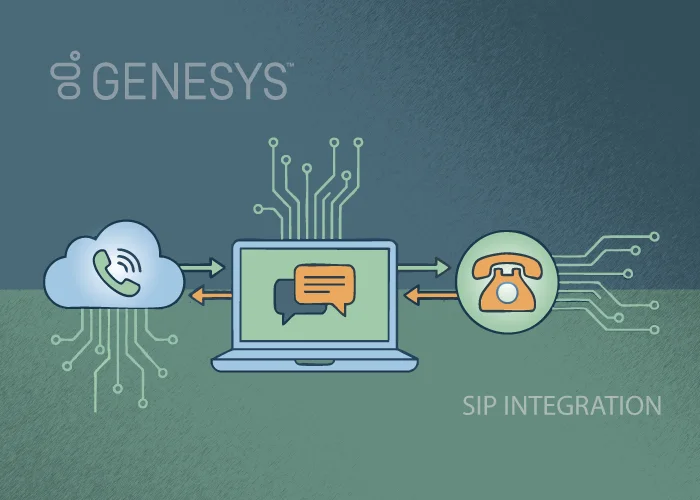
What is Genesys SIP Integration? A Beginner’s Guide

Diagram illustrating how Genesys SIP integration connects cloud telephony, SIP trunking, and business phone systems.

Most businesses assume that if they’re already using Genesys, they’re fully equipped for global voice communication. Surprisingly, that’s not the case. Without the right voice network behind it, your Genesys …Read More »

Unifying Global Voice for Business: Rethinking Borderless Communication

Visual representing unified global voice communication, connecting business calls across regions through a single digital platform.

Global businesses have come a long way in digitizing operations: finance, HR, marketing, and customer support now run on globally unified platforms. But one essential system still lags behind: the …Read More »

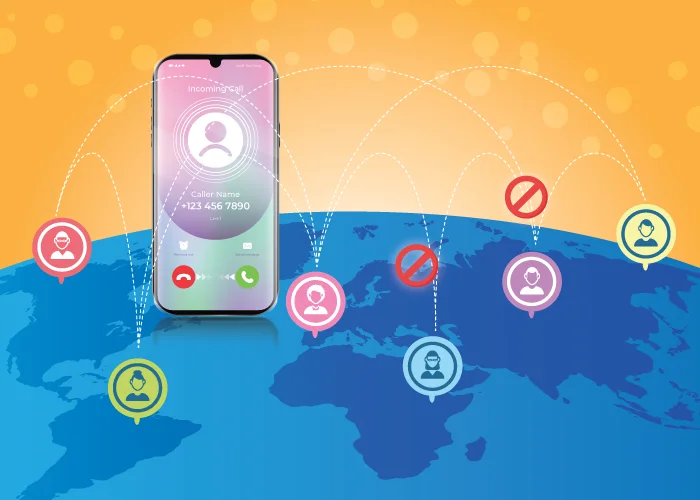
Why Europe is Cracking Down on In-Country Caller ID via International Routes

Global map with caller ID icons and regulatory symbols illustrating European telecom restrictions.

Europe is tightening regulations around in-country caller IDs, especially when domestic numbers appear on calls that originate from outside the country. For years, global businesses used this method to boost …Read More »

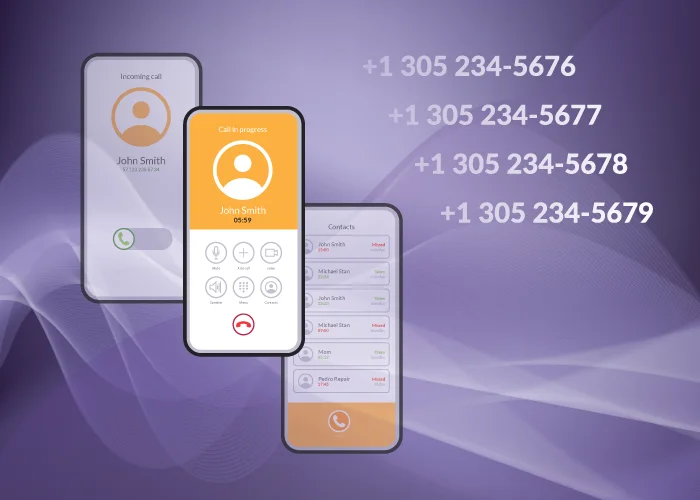
Consecutive Virtual Phone Numbers: The Complete Business Guide

A graphic showing showing consecutive virtual phone numbers listed on mobile devices for global business use.

As global teams scale sales, support, and regional operations, many businesses look for ways to organize their phone systems more efficiently. One solution that often gets overlooked but delivers huge …Read More »

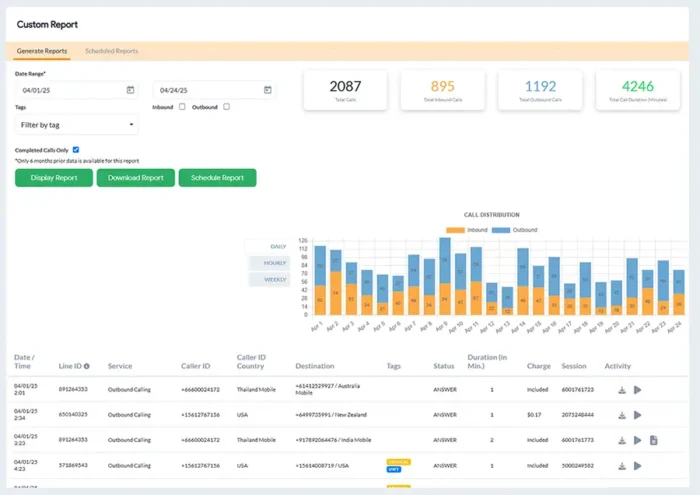
Holiday Season Reporting: Using Call Data to Prepare for Your Busiest Months

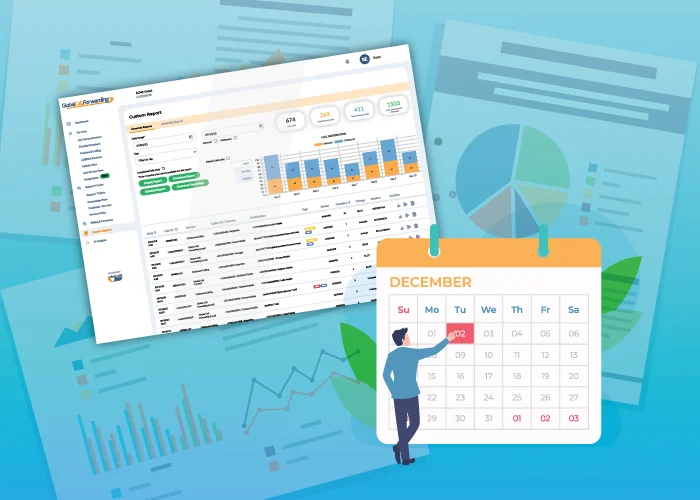
Holiday Season Reporting: Using Call Data to Prepare for Your Busiest Months

The holiday season has always been one of the most intense times of the year for global businesses. Between unpredictable call spikes, shifting team schedules, and higher sales activity, the …Read More »

6 Ways to Use the GCF Softphone in the HubSpot CRM

The Global Call Forwarding HubSpot integration gives your sales and support teams the tools they need to communicate effectively — right from within your CRM.

With features like click-to-call, automatic logging, and built-in softphone access, this integration helps streamline workflows, centralize data, and improve customer interactions without switching between apps.

Whether you’re managing global outreach, inbound support, or client follow-ups, here’s how to make the most of your GCF Softphone inside HubSpot.

How Does the HubSpot-GCF Integration Work

The GCF-Hubspot Calling integration connects your Global Call Forwarding softphone to HubSpot CRM, allowing your team to use GCF’s global voice features directly within their CRM workflow.
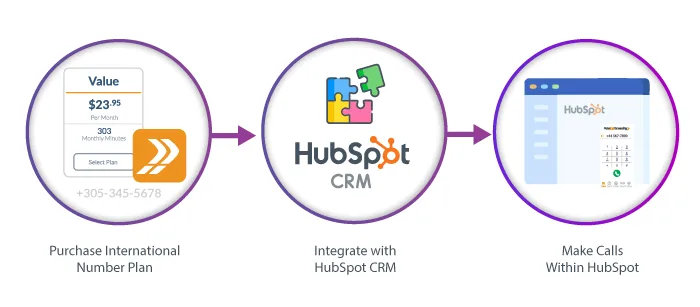
Chart showing how to use the HubSpot Calling Integration with the GCF Softphone.

Once integrated, you can make and receive calls using GCF numbers, access customer details, log call activity automatically, and manage conversations without leaving HubSpot. Calls are routed through the GCF softphone, which supports features like caller ID and call recording, giving teams a unified system for communication and customer engagement.

The result: better productivity, improved call accuracy, and a more streamlined support and sales process.

Benefits of a VoIP-CRM Integration

Integrating your VoIP phone system with your CRM centralizes communication and customer data in one platform—streamlining workflows and increasing productivity.

With VoIP-CRM integrations, teams can make and receive calls directly within the CRM using click-to-call, while incoming calls trigger softphone pops with relevant customer information easily available through the HubSpot platform.

Call activity, recordings, and notes are automatically logged, eliminating manual data entry and ensuring a complete view of each customer touchpoint. This integration helps sales and support teams save time, improve response accuracy, and deliver better service at scale.

How to Use the GCF Softphone with HubSpot

Connect Global Call Forwarding with HubSpot to streamline calling, boost productivity, and improve customer engagement—all within your CRM. With this integration, your teams can:

  • Click to call directly from contact records
  • Use local/global numbers across 160+ countries
  • Centralize communication and call history in one place
  • Automatically log, record, and transcribe every call
  • Analyze call performance and trends via advanced analytics
  • Manage caller ID and number display per region
  • Route calls smartly with IVR and forwarding rules
  • Track sales/support activity across global teams

Whether you’re in sales, support, or operations, this integration helps your team work smarter and deliver better results. Let’s see how:

1. Make and Receive Calls with Click-to-Call

No more copy-pasting numbers or dialing errors. With click-to-call functionality, your team can place outbound calls directly from any HubSpot contact record. One click initiates the call via the GCF Softphone, speeding up outreach and minimizing effort. This saves time and increases workflow efficiency by allowing you to start outgoing calls with a single click on the customer’s phone number.

Incoming calls trigger a softphone pop-up, enabling reps to answer quickly and stay focused on the task at hand.

2. Expand Global Coverage

For global teams and international customer bases, the GCF-HubSpot integration offers a powerful way to scale communication. Global Call Forwarding provides access to virtual phone numbers in 160+ countries, which can be easily integrated into your HubSpot CRM.

This means your teams can make and receive calls using local or toll-free numbers from anywhere—directly within HubSpot. Expanding coverage in key markets boosts pickup rates, builds local trust, and allows you to support customers in-region without needing a physical office.

Learn about the GCF Softphone calling integration for Hubspot CRM

3. Centralize All Communication in One Place

By integrating VoIP calling straight into the HubSpot CRM, you unify business communication in one place. Our HubSpot Calling integration lets you make and receive calls, access contact history, and log call activity — all from within your CRM. This streamlines daily workflows and keeps your team focused on meaningful interactions. Centralization makes it easier for sales and support teams to collaborate, track progress, and deliver better outcomes.

4. Automatically Log, Record, and Transcribe Calls

Every inbound and outbound call made through the GCF softphone is automatically logged within HubSpot. This includes call time, duration, call notes, and recordings. Agents no longer need to manually enter notes or update call histories—saving valuable time and improving data accuracy across sales and support workflows. This ensures complete visibility into the customer journey, helping managers and teams make better decisions.

With advanced features like call recording, transcription, and translation, teams gain more than just a phone connection—they get a record of every conversation. Recordings can be used for training, coaching, or compliance. Transcriptions provide searchable, text-based documentation of calls. And with translation, teams can convert transcriptions into other languages, making it easier to support multilingual customers and global operations while maintaining consistency across teams.
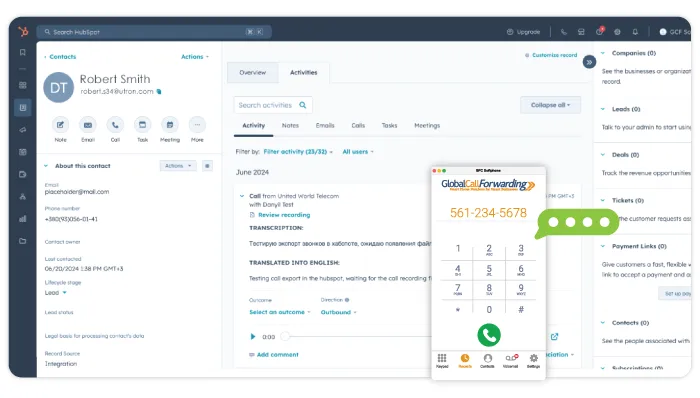
GCF Softphone within a HubSpot CRM dashboard.

5. Analyze Call Metrics for Better Performance

The GCF softphone integration unlocks access to detailed call analytics and custom reports accessible from your Global Call Forwarding dashboard. Track call volume by rep, team, region, or campaign. Use phone tags to identify trends and organize call data.

Monitor missed calls and response times, listen to voicemails and recordings, and more. You can even leverage AI-driven insights like sentiment analysis and keyword search to better understand customer needs and optimize training and performance.

6. Manage Caller ID and Global Numbers

Choose which business number to display when placing outbound calls from HubSpot—whether it’s a local number in your target market or a national number. With Global Call Forwarding, teams can easily manage and use numbers assigned to different countries and regions, enabling them to maintain a local presence while working remotely. Displaying a recognizable caller ID increases answer rates and reinforces your company’s credibility.

These settings can be easily managed from the GCF softphone.

7. Route Calls Intelligently with IVR Integration

Pairing IVR with HubSpot allows businesses to intelligently route calls based on caller input, location, time of day, or department selection. Set up routing and forwarding rules in the Global Call Forwarding control panel and apply them to the corresponding HubSpot phone lines, giving full visibility into each interaction.

Whether a caller presses 1 for sales or 2 for support, the integration ensures a seamless customer journey—and your team knows exactly how the customer was routed and why.

8. Monitor Multi-Location or Global Sales Activity

With our expansive international number coverage and HubSpot’s CRM capabilities, managers can track call volume, success rates, and responsiveness across global sales or support teams. Break down metrics by country, department, or time zone to evaluate performance, staffing needs, and regional campaign effectiveness.

This level of visibility helps you make data-driven decisions to scale efficiently and ensure consistent customer experiences—no matter where your teams or customers are located.

Get Started with the GCF-HubSpot Calling Integration

The GCF-HubSpot Calling integration is designed to simplify your team’s communication workflows while helping you scale globally. From advanced routing to data-rich analytics and AI insights, this integration provides the tools to improve every customer interaction.

Need global phone numbers, reliable call quality, or deeper reporting? Global Call Forwarding supports 160+ countries with advanced features to power your sales and support operations — all from the CRM you already use.

See how easy it is to set up our softphone integration with HubSpot.

Call our telecom professionals at (561) 908-6171 or speak with them online to learn more about our integrations! Implement the GCF Softphone in the HubSpot CRM integration to take your business communication and CRM to the next level!
France Phone Number Guide: An Explainer

A France phone number is a cost-effective way of growing in or entering the thriving French market.

You can build and foster relationships with current and potential clients. Plus, receive calls from these clients on multiple phone lines—VoIP, mobile, and landline.

And with a cloud-based phone system, you can scale your telephony system based on your business needs.

In our France phone number guide, learn about French virtual numbers, different number types, and formats.

Let’s see how using a local phone number helps boost business.

Guide to Phone Numbers in France

Obtaining a France phone number can help in creating a local presence and connecting with French clients.

One of the biggest advantages is that customers can call you at affordable local rates or even for free, depending on the number type you choose to use. Our France phone number guide will help you make the choice.

Businesses with familiar local codes gain trust, leading to increased support and engagement. Further, you can amplify brand visibility and customer recall with local numbers.

If you are thinking about purchasing a French number, read our article on how to get a business number in France.

France Phone Number Plan

The Autorité de Régulation des Communications Électroniques et des Postes (ARCEP) is the authority overseeing and managing France’s telecom sector. They take care of the country’s phone numbering system, making sure rules and standards are followed.

Telecom operators in France provide a plethora of offerings, from voice calls to data services, useful for businesses and service providers.

You can also explore virtual phone services that come with comprehensive features, such as call routing, call recording, and call forwarding, suitable for all business types.

In fact, Global Call Forwarding offers many of these features and more with our France virtual numbers.

Different Types of France Phone Numbers

The country code for France is ‘+33.’ All France phone numbers have 10 digits:

  • starting with the trunk prefix ‘0,’
  • followed by the area or toll-free code (800 or 805),
  • and a 7-8-digit-long subscriber number.

A standard France phone number looks like this: +33 0x xx-xx-xx-xx.

A strategic use of different number types can facilitate communication and help meet customer expectations in the French market and network with local clients.

Let’s understand these number types.

1. France Toll-Free Numbers

France toll-free numbers are a valuable conduit for French callers to reach your business free of cost. They appear as local toll-free numbers used in France with ‘0800’ and ‘0805’ prefixes.

Because these numbers work virtually, you can operate your business in the country from anywhere in the world and simply forward incoming calls to where your teams are located.

The standard France toll-free number format is +33 (0800) (xxx-xxx).

There are many perks to using a toll-free number:

  • Encourage interactions between global businesses and French consumers
  • Support real-time engagement
  • Enable you to test the market without physically being there.

Many service providers offer features like IVR, call recording, and geographic routing with their virtual toll-free numbers. This makes the toll-free numbers extra functional.

2. France Local or Geographic Numbers

Geographic numbers are region-specific and accessible at standard local calling rates.

If your business has a target audience in a specific French region, then having a local number allows you to tailor communication strategies and services to that area.

France is geographically divided into five main regions: Paris, North-West, North-East, South-East, and South-West.

Most providers include local numbers for major French cities and regions like:

  • Lyon (487)
  • Marseille (484)
  • Nice (422)
  • Paris (187)
  • Toulouse (532), and so on.

The standard France local number format is +33 01 xx-xx-xx-xx.
*The area code for Paris is 1.

Global Call Forwarding also offers France geographic and national numbers with Local 2-Way Voice. Use these numbers and display local, in-country caller IDs to place outbound calls to your customers in France and increase response and callback rates.

3. France National Numbers

National or non-geographic numbers are linked to an entire country instead of specific regions. So you can use these numbers to establish a presence beyond particular French cities.

Calls made to national numbers typically incur local calling rates, making them cost-effective for your callers.

A France national phone number starts with the prefix ‘9’ followed by an 8-digit subscriber number.

The standard France national number format is +33 09 71 xx-xx-xx.

Global Call Forwarding offers France national numbers with the ‘97’ prefix.

Related: Geographic Versus Non-Geographic Numbers
CSAT cta

4. France Mobile Numbers

Mobile phones are ubiquitous, and therefore, you can reach a broader audience with mobile numbers.

France mobile numbers start with prefixes ‘6’ or ‘7’ (mobile services code) followed by the 8-digit unique subscriber number.

The standard France mobile number format is +33 6 xx-xx-xx-xx.

Get a France Phone Number with Global Call Forwarding

Use our France phone number guide to take your business to new heights and establish yourself globally. Get a French number and make your business a cross-border success!

We can help you choose the right type of number to operate in France.

With early French roots, Global Call Forwarding has been a pioneer in the telecom industry since 1996, and we offer dynamic telecom solutions to transform business communications throughout France.

Global Call Forwarding Opens New Office in Brazil to Accelerate Product Innovation and Strengthen Regional Support

The new hub will focus on IT development, technical support, and customer success in response to growing demand from Brazil and South America.

DELRAY BEACH, FL, June 2025 – Global Call Forwarding, a leading provider of international business phone number solutions, announced the opening of a new office in Brazil. This expansion marks a strategic move to support the company’s growing customer base in Brazil and across South America, while also expanding its development and support capabilities.

The new Brazil office in São Paulo will serve as a regional hub for the company’s IT operations, with an immediate focus on expanding developer and telco specialist teams. In addition, Global Call Forwarding plans to grow its technical support and customer success functions to locally serve businesses in the region.

With a customer base of over 700 customers in Brazil and more than 2000 customers across South America, this move reflects Global Call Forwarding’s long-term commitment to building localized support infrastructure and ensuring high-quality service availability worldwide. “Brazil represents one of the fastest-growing markets for cloud communications, and we’re seeing increasing demand for scalable, reliable global voice solutions from both local and multinational companies operating in the region,” said Luke Genoyer, Business Development Manager at Global Call Forwarding. “This new office will allow us to accelerate feature development, provide faster technical support, and improve regional onboarding.”

The Brazil team will work closely with new and existing engineering and product development teams to support new feature rollouts and optimize network performance for regional users. “We’re excited to expand our footprint and welcome new talent into the company,” added Tiago Godoi,  “This investment is not just about growth—it’s about getting closer to our customers and continuing to deliver the high-touch, responsive support Global Call Forwarding is known for.”

Brazil office address: Rua Amália de Noronha, 151, Suite 204, São Paulo – SP, 05410-010, Brazil

About Global Call Forwarding

Global Call Forwarding is the leading telecom provider of virtual phone numbers for business, serving thousands of contact centers around the world. GCF was launched in 2007 as an exclusive brand of United World Telecom (UWT). UWT was founded in 1996 in Delray Beach, Florida, as a global telecommunications provider.

The company has a physical presence in the United States, Asia-Pacific, and Latin America and serves SMB and enterprise clients worldwide.

For more information or to inquire about opportunities in Brazil, visit www.globalcallforwarding.com.

Contact: Luke Genoyer
Phone: +1 (561) 908-6171
Email: luke@unitedworldtelecom.com

Global Call Forwarding Inaugura Novo Escritório no Brasil para Impulsionar Inovação e Reforçar Suporte Regional

O novo hub será focado em TI, suporte técnico e sucesso do cliente, atendendo à crescente demanda no Brasil e em outros mercados sul-americanos.

SÃO PAULO, BRASIL – 16 de junho de 2025 – A Global Call Forwarding, fornecedora líder de soluções de números de telefone internacionais para empresas, anunciou a abertura de um novo escritório no Brasil. Esta expansão estratégica visa apoiar a crescente base de clientes no Brasil e em outros países da América do Sul, além de fortalecer as capacidades de desenvolvimento e suporte da empresa.

O novo escritório, localizado em São Paulo, atuará como centro regional para as operações de TI da empresa, com foco imediato na expansão das equipes de desenvolvimento e especialistas em telecomunicações. A Global Call Forwarding também planeja expandir suas equipes de suporte técnico e sucesso do cliente para atender melhor as empresas locais.

Com mais de 700 clientes no Brasil e mais de 2.000 em toda a América do Sul, esse movimento reafirma o compromisso da empresa em construir uma infraestrutura de suporte local e garantir a disponibilidade de serviços de alta qualidade globalmente. “O Brasil representa um dos mercados de mais rápido crescimento para comunicações em nuvem, e estamos observando uma crescente demanda por soluções globais escaláveis e confiáveis, tanto por empresas locais quanto multinacionais”, afirma Luke Genoyer, Gerente de Desenvolvimento de Negócios da Global Call Forwarding. “Este novo escritório nos permitirá acelerar o desenvolvimento de funcionalidades, oferecer suporte técnico mais rápido e melhorar a integração regional.”

A equipe brasileira trabalhará em estreita colaboração com os times de engenharia e desenvolvimento de produto existentes para apoiar novos lançamentos de funcionalidades e otimizar o desempenho da rede para usuários da região. “Estamos empolgados em expandir nossa presença e dar as boas-vindas a novos talentos para a empresa,” acrescentou Tiago Godoi, CTO. “Este investimento não é apenas sobre crescimento — trata-se de estar mais próximo de nossos clientes e continuar oferecendo o suporte dedicado e personalizado pelo qual a Global Call Forwarding é reconhecida.”

Endereço do escritório no Brasil:
Rua Capitão Antônio Rosa, 409, Sala 201, São Paulo, SP 01443-010

Sobre a Global Call Forwarding

A Global Call Forwarding é uma provedora líder de números de telefone virtuais para empresas, atendendo milhares de contact centers ao redor do mundo. Lançada em 2007 como uma marca exclusiva da United World Telecom (UWT), a UWT foi fundada em 1996 em Delray Beach, Flórida, como uma fornecedora global de telecomunicações.

A empresa possui presença física nos Estados Unidos, na região Ásia-Pacífico e na América do Sul, atendendo clientes SMB e enterprise em escala global.

Para mais informações ou para saber sobre oportunidades no Brasil, visite:
www.globalcallforwarding.com

Contato de imprensa: Luke Genoyer
Telefone: +1 (561) 908-6171 | +55 (11) 5242-9617
Email: luke@unitedworldtelecom.com

How to Manage Global Voice: 10 Tips

Expanding your business globally is exciting, but staying connected across borders is an entirely different challenge.

Managing voice communication across time zones, underdeveloped in-country telecom infrastructures, and complicated regional regulations can become overwhelming. Many businesses experience dropped calls, inconsistent service, and increasing costs, all while trying to juggle multiple providers and platforms.

What works well in one country might fall apart in another, creating confusion for teams and frustration for customers.

At the core of all this is a weak communication network—one that can quietly deteriorate productivity, damage customer relationships, and eventually put deals at risk.

Managing voice communication globally isn’t just about having phone lines in place. It’s all about real-time coordination between teams, customers, and borders with clarity and consistency. In the absence of a proper setup, business growth might turn into chaos.

Fortunately, with the rise of cloud telephony, businesses can unify their global voice operations on a single, scalable platform. Here’s how to do it effectively.

In this guide, we’ll cover:

Why Businesses Need Reliable Global Voice Communication

Reliable voice communication is still one of the most effective ways to build trust and resolve complex issues. Industry analysis indicates that communication breakdowns are responsible for over 70% of business failures. More strikingly, communication inefficiency costs an annual loss of $37 billion in productivity. And globally distributed teams rely on voice communication for coordination, decision-making, and sales that can’t happen over chat or email.

But managing voice across borders introduces complexity:

  • Local presence matters for customer trust
  • Telecom regulations differ by country
  • Carrier coverage varies
  • International calling can prove expensive
  • Latency and call quality can degrade without the proper infrastructure

When you have a reliable global phone service for your business, you can handle customer calls across regions and time zones.

Cloud-based telephony solutions can make global call management easy and streamlined. With broad global coverage and advanced call handling capabilities, your business can establish a local presence in multiple target regions, all without worrying about dealing with various carriers—your global telephony provider will handle this for you.

Then simply route global customers to the right sales team or support center efficiently, thereby reducing delays and enhancing customer satisfaction. You can even add global voice to your CRM or help desk with telephony integrations, further centralizing business communication. Utilize this alongside call analytics, IVR, call recording, and other advanced features to create a comprehensive, fully functional global phone system.

Routing calls over the cloud also guarantees superior call quality by lowering latency, jitter, and dropped connections. Additionally, with built-in redundancies and automatic failover routing, reliable providers help ensure that no call or opportunity is missed, even in an emergency. Well-managed global communication ensures strong security. The integrity of telecom systems is vital in protecting sensitive information and ensuring service reliability—read more about the importance of reliable phone services straight from our experts.

All this is to say, a unified global voice setup is crucial for effective global operations, preventing communication failures, and growing a global customer base.

Infrastructure That Speaks Global: Set Up the Right Way

So, what do you need for global business communication?

First and foremost, establishing a robust international voice service demands careful consideration of the right technology and resources.

Before you launch global voice operations, you need a foundation that can scale. That includes:

  • A provider that offers international phone numbers, including local and toll-free options
  • Routing tools that handle call flows across time zones, languages, and departments
  • Compliance with telecom regulations in each region
  • Integration with CRM, helpdesk, and analytics systems
  • Real-time monitoring to ensure call quality and uptime
  • Reliable and responsive support from your telephony provider

With the right setup and global telephony partner, businesses can operate globally without sacrificing clarity, consistency, or control.

People managing their global voice network and international phone system.

How to Manage Global Voice: 10 Tips

Managing phone networks globally is challenging when you don’t know where to start. Here are the core strategies to help you manage global voice services at scale—whether you’re building support coverage, optimizing call quality, or entering new markets:

1. Map Out Your Global Voice Footprint

Having a thorough understanding of your target markets is essential when expanding internationally. Identifying key regions and locations can help you build an efficient and cost-effective global voice infrastructure. Here’s how to approach it strategically:

  • Explore Customer Locations & Growth Markets: Begin by mapping out the locations of your current customers and identifying where you will look for future growth opportunities. Understanding these regional practices helps you determine where to establish voice presence to ensure responsive, localized service.
  • Align with Market Research & Business Goals: Use market research and global expansion strategies to identify high-potential regions for telecom services. Your voice infrastructure should support your growth strategy. Prioritize markets where your presence will directly support revenue opportunities.
  • View Operational Hubs & Team Distribution: Check for the locations of your support teams, sales offices, and remote workers. Seamless internal communication between global teams is crucial for operational efficiency and delivering a unified customer experience.
  • Account for Regulatory & Compliance Requirements: Telecom compliance and regulations vary widely by region. Understanding these legal requirements early helps you choose compliant voice solutions and avoid future roadblocks. Alternatively, you can work with a global telephony provider with experience managing compliance requirements.
  • Simplify Call Management with the Right Tools: Managing global call routing across multiple systems is a difficult task. Look for providers that offer centralized tools to build, manage, and intelligently route calls across borders, simplifying your IVR setup and ensuring every call reaches the right destination.

2. Choose Number Types That Fit Customer Needs

Your global phone numbers are more than just contact points; they are strategic assets that can significantly impact customer engagement and brand perception. Select the phone number type that best suits your business needs to develop stronger customer connections across your international markets.

Once you understand which locations and teams need to be covered, you can decide how to spread your voice coverage:

  • Multiple local or toll-free numbers for different target markets
  • Voice coverage for hard-to-reach regions
  • Regional support hotlines receiving calls from neighboring countries (example – the LatAm support center supporting all of South American customers)
  • Numbers supporting inbound and outbound calling, and so on.

Choose phone numbers for your global voice strategy based on intent:

  • Local phone numbers — use local recognizable area codes and boost answer rates and establish in-market trust.
  • International toll-free numbers (ITFS, UIFN) — provide a free, convenient way for customers to reach you.
  • Local 2-Way Voice numbers — enable outbound and inbound calling with local caller ID.

Beyond functionality, your number type should align with your brand positioning and customer expectations. A thoughtful approach ensures your business remains accessible, familiar, and relevant in every market.

Not sure which phone number type fits your needs? Check out our guide to international phone number types or chat with our global communications experts for custom recommendations for your specific business.

3. Ensure Global Compliance and Network Security Requirements

Telecom regulations vary dramatically across countries—especially in terms of number registration, caller ID rules, and data protection.

Global voice communication demands strict adherence to security and regulatory standards. As your business expands across borders, it is essential to collaborate with a global telephony provider that adheres to telecom regulations in every region and maintains a secure infrastructure.

Look for providers who host their systems in Tier-rated data centers, offer security features such as two-factor authentication, and utilize encrypted connections for voice traffic. They should use a secure global voice network with 24/7 monitoring and PCI-compliant payment processing.

Additionally, ensure that the provider conducts regular network assessments and carefully manages vendor relationships to maintain compliance with relevant regulations. These practices are crucial for safeguarding sensitive data, maintaining uninterrupted communication, and fostering customer trust on a global scale. With proactive support and custom security features, your provider can help you stay compliant and secure, regardless of where your business operates.

4. Optimize Call Quality Across All Devices and Networks

Global communication requires consistent, high-quality audio. Poor call quality leads to missed information, frustrated teams, and lost deals. Achieving high-quality global phone communication requires more than just a stable internet connection—it demands a robust, redundant infrastructure for resilience and clarity.

To improve voice quality, choose a provider that:

  • Has global Points of Presence (PoPs) and multiple layers of redundancy
  • Consistently monitors call traffic for latency, jitter, and packet loss
  • Tests number connectivity regularly across countries
  • Remains responsive 24/7 for any network or quality issues

At Global Call Forwarding, we offer 24/7 phone and live chat support to identify and resolve issues before they affect communication. We prioritize a reliable global network infrastructure and continuous monitoring and testing to guarantee clear voice communication, with a 99.99% uptime assurance.

5. Consolidate Voice Operations on a Unified Platform

There is unnecessary complexity and operational costs involved in managing multi-carrier phone services across various locations. Managing separate providers in different countries creates complexity—multiple contracts, inconsistent SLAs, and higher support overhead.

Instead, centralize with one provider that offers:

  • Full geographic coverage
  • One interface for number management and call routing
  • Unified billing and reporting

Telecom consolidation simplifies administrative tasks, minimizes errors, reduces costs, and provides a consistent user experience for your global teams. Look for a provider that offers complete phone number coverage, advanced system capabilities, and in-depth expertise in global voice to unify and optimize your communication infrastructure.

6. Integrate Voice with Core Business Tools

​Integrating your global phone system with core business applications, such as CRM platforms, helpdesk software, and PBX systems, is essential for efficient business operations across teams and markets.

Softphone integrations can offer the following benefits:

  • Enabling click-to-call within top ranked CRM platforms like Salesforce or HubSpot to manage calls directly within CRM pages
  • Automatically logging calls and accessing call history during support interactions to reduce manual, time-consuming work
  • Integrating AI and analytics to analyze call traffic with transcripts, recordings, and customer sentiment.

This integrated approach not only simplifies workflows but also supports a scalable and responsive global voice communication system.​

7. Expand Global Coverage with Routing Strategies

As you scale, it’s not just about answering calls—it’s about routing them intelligently. This ensures that every caller connects with the right person at the right time. Efficient call management is crucial for supporting your customers where they are, delivering exceptional customer experiences, and optimizing agent productivity across diverse time zones and geographical locations.

Common routing strategies for global customer support include:

  • Time-of-day routing to follow global business hours
    Geographic routing to match callers with local support teams
    IVR flows to pre-qualify and direct inquiries

By strategically setting up your global teams and implementing these intelligent routing rules, you ensure that every customer interaction is handled promptly. Optimizing call handling minimizes wait times, enhances first-call resolution rates, and contributes to improving customer satisfaction.

8. Monitor Voice Performance and Adapt

Global voice systems aren’t “set-it-and-forget-it.” Consistent monitoring of your global phone service is essential for maintaining high-quality communication and operational efficiency.

Call activity reporting within a global voice system

Track call metrics and KPIs such as:

  • call volume
  • connection rates
  • average call duration
  • first-call resolution rates, etc

These metrics help identify trends, measure agent productivity, and identify areas for improvement.​

Take this a step further with AI-driven call insights (e.g., transcription, keyword detection, sentiment analysis) to uncover patterns and optimize support and sales performance. Providers like Global Call Forwarding offer advanced analytics that provide deeper insights after each call.​

By leveraging these tools, businesses can make informed decisions to optimize customer service, focus on practical training, and refine their communication strategies. Regular monitoring ensures that your global voice operations remain aligned with business objectives and customer expectations.

9. Build Redundancy into Your Voice Infrastructure

Reliability is critical in global communications—especially when serving customers across multiple regions and time zones. To ensure business continuity, build redundancy into your voice infrastructure. This includes working with providers that offer geo-redundant data centers and failover routing, so that if one point of presence (PoP) or carrier fails, calls are automatically rerouted without disruption.

You can also consider multi-provider SIP failover, where outbound or inbound calls can be redirected to a backup network in case of downtime. Combined with a disaster recovery plan and call monitoring, redundancy safeguards your communication flow—helping you avoid missed calls, frustrated customers, and reputational risk.

10. Localize Your Voice Presence

Customers are more likely to trust and engage with brands that appear local and speak their language. Localizing your voice presence goes beyond offering a local number with recognizable area codes. It involves adapting to the language preferences, cultural expectations, and time zones of your target markets.

This might mean:

  • Offering IVR prompts in local languages
  • Scheduling live support during regional business hours
  • Routing calls from certain regions to regional centers
  • Using local caller IDs when making outbound calls, and so on.

Localization and customizing your international local presence for each market also improves routing accuracy, as calls can be directed to regional teams best equipped to handle inquiries. The result is a more personalized experience that builds trust, reduces friction, and drives customer satisfaction in each market you serve.

Go Beyond Connectivity with Global Call Forwarding

Managing voice communication on a global scale takes more than just buying phone numbers. It requires smart routing, consistent call quality, seamless integration, and the ability to adapt across regions and time zones.

At Global Call Forwarding, we help businesses access all of this in one place. With us, you can get:

  • International phone numbers in 160+ countries
  • Local 2-Way Voice for inbound and outbound communication
  • Custom call routing, IVR flows, and failover
  • Outbound calling with local caller ID, softphone apps
  • CRM integrations and AI Call Insights for smarter decision-making

Our platform supports a scalable, reliable voice infrastructure designed for global operations, enabling seamless connections with customers worldwide without the need for physical offices. We can help you set up efficient handling of global inbound and outbound calls, crucial for customer support, sales, and operations.

Whether you’re expanding into new markets or improving customer support across time zones, we make it easier to stay connected and in control.

Contact our team to learn how we can help you manage global voice communication more effectively.

Benefits of Call Sentiment Analysis for Sales and Support Teams

The ability to gauge emotions and pick up on the unsaid dynamics of a conversation is an important skill in business. A conveying handshake, a confident gaze, or a subtle shift in tone can speak volumes in a business conversation. But what happens when those interactions move to a digital space?

Closing a critical deal or resolving a frustrating customer issue is challenging enough while dealing face-to-face. Now imagine trying to achieve the same outcome without the benefit of seeing their reactions, hearing their tone, or reading their body language

Understanding intent and emotion has been challenging now as business conversations happen over calls, emails, and chats.

That’s where the magic of call sentiment analysis comes in.

Call sentiment analysis is crucial for business and a key mechanism in enhancing customer experience, proactive issue resolution, data-driven decision-making, and competitive advantage. This tool can overcome the digital gap and provides insightful information on your customers’ feelings, which is even more accurate than in-person conversations.

Let’s discover how call sentimental analysis can help you make your digital chats more efficient.

What is Call Sentiment Analysis?

Call sentiment analysis evaluates customer feedback to determine opinions, emotions, and views regarding product lines, services, brands, marketing campaigns, and any other business matters. By leveraging natural language processing and artificial intelligence, call sentiment analysis provides valuable insights into customer emotions.

Businesses can better understand the quality of phone interactions by using this feature to assess the overall sentiment or mood of a business call and categorize the sentiment as positive, neutral, or negative.

sentiment faces

Use this feature to understand customer emotions, identify areas for improvement, and make data-driven decisions that improve conversations and drive proactive sales and support efforts.

For example, organizations can contact disappointed customers directly and improve their offerings by monitoring customers’ opinions about the businesses and products or services.

With Global Call Forwarding, call sentiment analysis is seamlessly integrated into our AI Call Insights, offering businesses comprehensive insights into customer conversations.

How Does Sentiment Analysis Work?

Sentiment analysis uses artificial intelligence (AI) and large language models (LLMs) to analyze call transcripts. It then provides a clear sentiment ranking (positive, negative, or neutral), giving businesses valuable insights into call handling and customer reactions.

Here’s how sentiments are analyzed with Global Call Forwarding:

1. Call Recording
Firstly, the process of sentiment analysis starts with securely recording every incoming and outgoing call, and then the entire conversation is saved.

2. Process of Converting Call into Transcription
Next, our AI converts these calls into transcripts and thoroughly evaluates and analyzes the context and content of the discussion.

3. AI Analysis Using LLMs
The AI then uses LLM technology to analyze the conversation’s flow, tone, word choice, and discussion.

4. Sentiment Evaluation and Ranking
A sentiment ranking, such as “Mostly positive,” “Slightly positive,” “Neutral,” “Slightly negative,” and “Mostly negative” is generated from the analysis results to measure the sentiment.

5. Post-Call Reporting
After the call, sentiments are available on your control panel’s AI Insights dashboard. These sentiments are based on textual analysis of customer conversations and call transcription.

Businesses use this data to pinpoint areas for improvement in their communication tactics, enhance customer service, and gain a deeper understanding of customer emotions. For example, you can quickly identify and examine calls that require more attention. For instance, you can explore calls with “mostly positive” ratings to see what the customers liked and then those with “mostly negative” ratings to see what went wrong.

How Sales & Support Teams Can Use Sentiment Trends

By understanding sentiment trends, sales and support managers may improve team strategies, enhance customer experiences, and achieve more favorable outcomes. Managers can gain important insights by examining sentiment data to improve overall performance and call effectiveness.

Let’s explore how sales and support teams can use sentiment trends:

1. Gauge the Success of Sales and Support Calls

Identifying whether calls are heading toward success is essential for improving sales and supporting team performance. Sentiment analysis gives managers a clear picture of call outcomes, enabling them to determine which conversations achieved their business goals and which did not.

positive call transcript

2. Analyze Why Calls Succeed or Fail

Support teams can dig deeper by examining call recordings and transcripts and researching the “why” behind call sentiment results. While unsuccessful calls highlight areas that require improvement, such as tone and handling objections, successful calls can be analyzed to uncover best practices.

3. Use Failed Calls as Training Opportunities

You can use calls marked with negative sentiments to teach team members how to handle difficult conversations and situations. Review recordings of these calls to identify opportunities for improving the quality of the service, building a faithful relationship with customers.

negative call transcript

4. Monitor Team and Agent Performance

Sentiment data offers a quick overview assessment of team and individual performance. Whether you want to see individual agent performance or broader department or phone line activity, you can use phone tags and filters to narrow down call reports.

Managers can use these features together to nurture a culture of continuous development by highlighting underperforming team members, recognizing top performers, and rewarding excellence.

5. Encourage Proactive Issue Resolution

Bad calls don’t always have to have negative consequences. Managers can proactively handle critical issues, providing prompt solutions and preserving customer relationships by quickly recognizing negative sentiment.

6. Leverage Successful Calls for Upselling Opportunities

Positive sentiment immediately indicates customer satisfaction and engagement with your products or services. You can use these calls to explore cross-selling or upselling opportunities by offering more products or services that align with the needs of your target market.

7. Refine Sales and Support Strategies

Sentiment analysis can also help fine-tune your support and sales strategies by giving you a better read on customer emotions and feedback. For instance, sales teams can create more persuasive pitches by recognizing typical objections or pain areas, and support teams can modify their responses to better address customer issues.

8. Create a Feedback Loop for Ongoing Improvement

To establish a feedback loop, share and discuss sentiment trends with your team regularly. You can talk about what is effective, what needs improvement, and how data-driven initiatives are changing among your sales and support team. This openness keeps everyone aligned with company objectives and promotes a cooperative atmosphere.

This way, sales and support teams can turn call data into workable plans by methodically examining sentiment trends. This ensures ongoing development, improved customer relationships, and business growth.

Tired of Missed Customer Opportunities? GCF Can Help

Global Call Forwarding offers real-time sentiment insights from each call. With advanced AI VoIP capabilities, our AI Call Insights features—including our Sentiment Analysis, Call Transcripts, and Call Summary—are designed to meet the demands of businesses.

Our AI features help managers and agents stay on top of every call by filtering conversations across phone lines and teams. With sentiment analysis, they can pinpoint problematic calls, quickly review key details through summaries, and investigate deeply with transcripts and recordings. This enables smarter decision-making, improving customer satisfaction and boosting overall efficiency in sales and support.

Want to give sentiment analysis a test-drive? Please speak with our representatives and get in touch with us. Call us at +1 (561) 908-6171!

Increase Healthcare Accessibility with Cloud Telephony

Imagine a busy hospital where unanswered calls lead to missed appointments and critical lab results get stuck between departments. Such scenarios can compromise patient safety and satisfaction, creating a stressful environment for healthcare professionals.

The healthcare industry requires clear and efficient communication. From booking appointments to receiving critical medical advice, timely and accessible healthcare communication tools and channels are essential for both patients and providers.

As the demand for more streamlined healthcare communication grows, the limitations of traditional phone systems become more apparent, affecting patient satisfaction and operational effectiveness.

Cloud telephony has varied solutions to bridge these healthcare communication gaps. Its secure and scalable platform can transform communication within your institution. This translates to streamlined workflows, facilitated information sharing between departments, and ensuring calls reach the right person. Ultimately, this improves healthcare accessibility for patients and enhances overall care delivery.

Challenges of Medical Phone Systems

Here are some of the reasons why traditional phone systems fall short of providing effective communication.

  1. Traditional phone systems lack integration with electronic health records (EHRs) and other digital platforms, which creates information silos. This may cause delays in patient care and hinder interprofessional collaboration.
  2. These phone systems have limited scalability. Therefore they struggle to handle fluctuating call volume and adding new features, phone lines, or users.
  3. Traditional systems also lack advanced telehealth capabilities. Audio call conversations don’t have the visual cues and detailed information exchange that video consultations offer.
  4. Traditional and legacy systems can prove more expensive than VoIP alternatives. Research shows companies can reduce costs by 87% when switching to a cloud phone solution.

What Role Can Cloud Telephony Play?

Cloud telephony leverages the internet to make and receive phone calls. Instead of relying on traditional phone lines, this technology transmits voice data as packets over the internet using voice over internet protocol (VoIP).

VoIP in healthcare allows for greater flexibility, scalability, and advanced features compared to traditional systems.

6 Ways to Increase Healthcare Coverage and Accessibility with Cloud Telephony

Besides facilitating telehealth services, cloud telephony has offered innovative solutions to overcome traditional communication barriers in patient care.

Let’s take a look at six ways in which you can leverage cloud communication for healthcare telephony:

  1. Extend global reach with virtual phone numbers
  2. Streamline communication for distributed healthcare teams
  3. Organize call flows with IVR
  4. Track calls to improve caller experiences
  5. Enhance privacy for professionals with caller ID management
  6. Ensure service continuity with failover options

1. Extend Global Reach with Virtual Numbers

Cloud telephony provides extended global coverage for target regions through virtual numbers. You can get toll-free numbers or local numbers for your business from different regions. And for hard-to-reach and remote regions, some providers offer other bespoke solutions to enable accessibility.

Patients from these regions requiring specialists can reach your organization for free or with local standard rates. This expands access to specialized care and breaks down geographical barriers for patients in remote areas.

Global Call Forwarding can set you up with international phone numbers from more than 160 countries around the world. Check out our global coverage to see if we cover your target regions!

healthcare phone coverage

2. Streamline Communication for Distributed Healthcare Teams

If your clinics, teams, or specialists are dispersed globally, you can connect through a centralized communication platform. With cloud telephony features like international call forwarding and advanced routing, you can automate call management, sending calls to the most appropriate location automatically.

Or, acquire multiple international numbers and have the calls pass through one phone service to the right location. For example, one of our healthcare clients Healthy Stuff needed a phone system that covers their sales and support teams across Australia, Ireland, and US and sends incoming calls to their teams in the UK.

With international phone numbers and routing, you don’t need a manual operator managing incoming calls. You simply set everything up beforehand and let the system work for you.

3. Organize Call Flows with IVR

Cloud telephony empowers healthcare providers to manage call flows strategically, fostering both efficiency and patient trust. An interactive voice response system (IVR) routes calls based on voice or touch-tone inputs from callers. You can plan for different call flows and customer queries beforehand and feedback them into your healthcare IVR.

For instance, the IVR can greet callers and present clear options—‘1’ for scheduling appointments, ‘2’ for prescription refills, etc. Based on the input, the IVR system can route the call to an agent or voicemail or the appropriate destination accordingly.

This automated telephony system can significantly improve patient satisfaction by reducing wait times, improving accessibility, and empowering callers with self-service options.

4. Track Calls to Improve Caller Experiences

Every call holds valuable information. Track trends in call volume, wait times, and reasons for calls using call records and analytics. By analyzing this data, healthcare institutions can identify areas for improvement like appointment scheduling bottlenecks.

Say there’s a spike in calls for appointments during lunch when lines are busy. Features like time of day routing can be implemented during these times, and incoming calls can be redirected to another available team. In this manner, you can reduce wait times and deliver better customer experience.

Moreover, dedicated hotline numbers for emergencies and non-emergencies ensure patients receive the appropriate level of care promptly. Then, when calls come in, your teams can identify the type of call and know how to respond. This targeted approach prioritizes urgent situations while also addressing non-critical needs through self-service IVR options.

Also, call tracking data can help in allocating resources effectively based on call types. For example, if a high number of calls are related to pediatrics, more staff or dedicated lines can be channeled for pediatric inquiries.

Marketing and advertising campaigns benefit greatly from call tracking data. By using multiple numbers for different marketing channels such as flyers, social media, and websites, you can track call volume and determine which channels generate the most calls. This allows businesses to make targeted and efficient marketing spends.

5. Enhance Privacy for Professionals with Caller ID Management

Caller ID management is a valuable feature that empowers healthcare organizations to protect their professionals’ privacy during private patient consultations. Adjust your caller ID to display the healthcare organization’s number instead of a professional’s personal number, especially during telehealth visits.

This way, patients don’t have access to professionals’ personal contact information and vice versa, maintaining clear boundaries and avoiding unwanted calls outside of work hours.

6. Ensure Service Continuity

Cloud telephony platforms and features are built for resilience. And both provider and customer redundancy mechanisms are crucial for a reliable communication system.

With phone calls being the preferred communication channel, VoIP providers must maintain robust backups and redundancy options to ensure their network and servers are always operational. Make sure to check their network distribution to understand how they protect their systems and servers.

They should also provide features like failover forwarding and redundant routing that help keep communication active in the event of technical glitches or internet outages. When you set these features up, they automatically route calls to alternative numbers or backup systems, if the primary communication system fails.

Another way to maintain continuous service is to use a responsive provider. For instance, another healthcare client Novartis was experiencing service-related issues and outages with their local provider. They needed a responsive cloud telephony provider so they could continue to communicate with customers without any downtime.

As a healthcare provider, you must safeguard patient access to communication channels and professionals even in unprecedented scenarios. This reliability can make your business a dependable source of healthcare support in times of crisis.

How Can Global Call Forwarding Help?

A robust communication system is absolutely vital for any healthcare setup. Using a combination of solutions like call forwarding, IVR, voicemail, call recording, etc., you can meet unique communication demands of your organization.

Global Call Forwarding has been helping healthcare institutions worldwide with a suite of communication tools to build advanced business phone systems.

Talk to our experts and find out how you increase healthcare accessibility with cloud telephone!

Related: Why Cloud Telephony is Essential for Scaling Tech Startups

Offering 24/7 Global Support as a Travel Company

Are you in the travel and hospitality business, striving to enhance global support? Imagine offering round-the-clock assistance to your global clientele, leveraging the latest in cloud telephony.

Travel companies face the critical challenge of providing exceptional, uninterrupted customer service to a global audience. But how do you maintain high-quality support across various regions and time zones effectively and cost-efficiently?

By building a global phone service that efficiently routes calls from traveling customers to the right agent at the right time. From understanding diverse customer expectations to offering multilingual IVR support to optimizing outbound calling efforts, the possibilities for enhancing global customer satisfaction are endless.

In this article, we’ll go over the different ways travel companies can offer 24/7 global customer support using cloud telephony solutions, including:

  • Getting international phone numbers
  • Leveraging advanced routing features
  • Organizing custom call flows
  • Using global support strategies
  • Optimizing outbound calling campaigns, and more.

Cloud Phone Solutions for Travel

The travel industry encompasses diverse businesses, including travel agencies, hotels, transport services, ecotourism ventures, and more. But the common denominator is the need for exceptional, responsive, and, at times, global customer support.

One way to achieve this is by offering round-the-clock customer support. Doing so meets the needs of travelers from different regions across time zones. Cloud telephony solutions can help set up a state-of-the-art 24/7 global support system for travel companies.

What Cloud Telephony Helps With?

Cloud telephony allows you to connect with customers across different regions and time zones virtually. And call management features like international call forwarding and routing lets traveling customers reach you, regardless of your or their physical location.

You can also set up multilingual support options so that when travelers call your business, the automated IVR system greets them and provides language options to choose the language in which they need support. Based on their selection, the call routes to the most appropriate agent or department.

Certain advanced IVR systems can also provide self-service options for travelers. This can include options for common inquiries, such as booking status or account and flight information, allowing callers to resolve their queries without agent assistance.

How to Offer 24/7 Global Support as a Travel and Hospitality Company

There are several ways in which travel companies leverage VoIP to offer 24/7 support to their global customers. Here are some of our recommendations:

1. Find a Global Telephony Provider

First and foremost, you’ll need a global telephony provider that can cover the target regions where your customers reside or travel to. This phone service provider must be able to offer all the solutions you need—from global phone coverage to call management features—to centralize communication across multiple locations and platforms.

Doing so will help you streamline operations and provide consistent customer experiences worldwide. And by consolidating communication services onto a single platform, you can manage customer interactions more smoothly.

From international numbers to high-quality voice calling, your global telephony service provider can equip you with solutions to enter the global stage.

Voice solutions for global travel and hospitality companies

2. Get International Phone Numbers

Extend your voice coverage and establish a local presence in target countries with in-country international phone numbers. This includes using local and toll-free options that are accessible and cost-effective for traveling customers. These virtual numbers enable you to enter different countries without a physical presence. By making it easy for customers to reach your business, you show your dedication to helping them.

For instance, a US-based tour agency can get virtual numbers for popular tourist destinations like Singapore or Japan. By offering toll-free number options, travelers visiting these countries can easily reach the agency for assistance without incurring charges.

EaseMyTrip, a global travel service provider, used Global Call Forwarding to consolidate global telephony with local numbers from 6 countries. By doing so, they were able to offer uninterrupted support for international clients while accessing real-time call data and management settings through the control panel.

3. Leverage Advanced Routing

Once your global phone numbers are set up, you can use advanced routing features to provide 24/7 support. Most cloud phone service providers offer different types of routing features and strategies. We recommend businesses use time-of-day routing and geo-routing to provide global support.

With time-based routing, you route calls according to the time of the day or day of the week. If a customer calls outside of your regular business hours, you can send the call to another location, such as a team in a different time zone or backup call center.

With location-based routing, you can direct customer inquiries based on the caller’s geographical location or their caller ID. So, a Spain customer calling for assistance is automatically routed to the European service center. Agents there are available during local business hours and speak the customer’s language. This ensures that customers receive localized support from agents who understand their needs, enhancing the overall customer experience.

By pairing these routing strategies, your business can adopt a follow-the-sun support model, becoming available to customers 24/7.

Crystal Cruises found that many customer inquiries were reaching their US-based reservation office after hours due to time zone differences. This led to missed calls, delayed responses, and lost sales opportunities. They used virtual phone numbers to forward calls to a local support center in Cyprus, ensuring that customers could receive prompt assistance during Gulf Standard Time.

4. Create Custom Call Flows

Now, when you’re juggling multiple phone numbers and countries, call handling can get tricky. To ensure efficiency, you’ll need to create tailored call flows for different regions and requests to cover core touchpoints in the customer journey. That’s where IVR and auto attendant systems come in handy. You can use these tools to redirect inquiries to the appropriate departments, such as bookings, check-ins, or complaints.

For instance, at the booking assistance level, customers may have questions about available destinations, pricing, package deals, or special accommodations. Once you have identified the various possible inquiries, you can design a multi-level IVR system that guides callers through various options. Something like: “Press 1 for Destinations,” “Press 2 for Pricing and Packages,” etc. Each option leads to a different branch of the call flow, directing the caller to the appropriate and available agent.

This way, a call flow builder and multi-level IVR systems can create personalized communication systems to assist customers, regardless of the time of the day.

Offering 24/7 follow the sun support as a global travel company.

5. Use Global Support Strategies

24/7 global support strategies range from using VoIP features to distributing workforce. Here are strategies to consider:

  • Establish a network of global and regional contact centers or leverage remote agents in different time zones to provide round-the-clock support.
  • Train agents to understand, distinguish, and respect cultural differences when working with global customers.
  • Ensure smooth handoffs across different regional teams with proper documentation within a CRM or help desk software.
  • Use IVR to automate responses to common FAQs and redirect or provide self-service options for callers. For instance, directing travelers to the best websites for booking flights can empower them to find quick solutions on their own. This lets your caller independently get the help they need swiftly.
  • Utilize multilingual IVR systems to cater to callers who speak different languages. Provide prompts and menu options in multiple languages, allowing callers to select their preferred language for assistance and then route them to teams located in those regions.
  • Use translation features like voicemail translation and call recording translation to increase comprehension and accessibility, leading to efficient follow-up and resolution. Check out our guide on how to translate voicemail in your preferred language.

Learn more in our guide to global customer support strategies.

6. Prepare for High Call Volumes

Anticipate peak travel seasons and prepare for high call volumes using automated routing tools for self-service and escalation. With these tools, you can:

  • Reduce wait times
  • Distribute workload efficiently among agents and teams
  • Enable customers to resolve simple inquiries on their own
  • Free up your support staff to handle more complex issues and handle every call with care
  • Set up backup support options during high call periods, and so on.

Design an escalation matrix within your IVR and ACD systems for callers who require further assistance. This makes sure high-priority inquiries are attended in a timely manner.

7. Optimize Outbound Calling

Outbound calls with recognizable caller ID, such as your local business number, are more likely to be answered. This is because travelers may be wary of answering calls from unknown or unfamiliar numbers due to concerns about potential scams or unsolicited marketing calls.

By using and displaying local phone numbers, you can streamline the follow-up process, making it easier for your agents to engage with missed connections. Local numbers will also encourage more return calls (callbacks) from customers.

8. Integrate with CRM

Adding cloud telephony to CRM systems allows your support agents to access comprehensive customer profiles. They can:

  • Access real-time booking information and purchase history,
  • Assist with reservations and queries, and
  • Review customer preferences and interactions.

With this information, your agents can personalize the support experience without needing to catch up on the call. They can address customers by name and anticipate their needs based on past interactions. Plus they can add notes and make and receive calls directly from the CRM interface. This reduces the need for customers to repeat information, enter data manually, or toggle multiple platforms.

VoIP CRM integration systems provide valuable insights into customer behavior, trends, and preferences. You can analyze call data, customer interactions, and booking patterns to identify opportunities for improvement and refine marketing strategies.

How Can GCF Help?

Cloud telephony solutions can greatly help in offering 24/7 global support. Pair these with your customer support strategies, and you can improve customer experiences across the board.

Global Call Forwarding has been helping businesses across industries worldwide with top-notch cloud telephony solutions. We can help you design a global support system with our advanced calling solutions.

Want to see how we can help your travel business? Call us or chat with us online today!

How to Improve Call Connect and Pickup Rates for International Calls

Are you making business phone calls to people in other countries, but nobody answers?

Well, over 80% of people are “extremely unlikely” to answer a call from an “unknown number.”

As a business, you’ll want to take steps to encourage people on the other end of the phone to answer your calls. This article discusses tools, tips, and strategies businesses can use to improve call connect and pickup rates.

What Are Call Connection Rates?

Call connection rate is the percentage of calls that successfully connect and are answered by the dialed party.

For example, suppose you make 100 calls in a day, and 50 of those calls are answered. Your call connection rate for that day is 50%.

Call connection rates are also known as pickup rates or answer rates.

Strategies for Improving Call Connection Rates

Through our years of experience advising businesses on international telecommunications best practices, we’ve created a comprehensive list of strategies and tips to improve outbound call pickup rates.

Quick Summary:

  • Use a local in-country caller ID.
  • Follow good outbound calling etiquette (call at acceptable times, don’t call multiple times in a row, prioritize warm over cold calling).
  • Ensure your phone number is not marked as spam, and audit how your caller ID appears across countries and networks.
  • Use a multi-channel strategy.
  • Leverage outbound calling technologies.

Let’s dig into these strategies in more depth:

Use a Local Caller ID

People are less likely to answer calls from unfamiliar foreign phone numbers. For example, a business prospect in the United States is unlikely to answer calls from a Mexico phone number.

The best way to improve call pickup rates is to use a local in-country caller ID. For example, businesses calling from Mexico to the United States should show a local US caller ID.

See how Directum Translations used a US caller ID to improve call connection rates from Mexico to the US.

Gunnar Hallgrimsson quote

If you cannot use a local caller ID due to in-country network restrictions or budgeting constraints, the next best option would be to use the caller ID from a neighboring country or close trading partner.

For example, if you’re calling GCC countries, you could show a Bahrain caller ID. Similarly, someone could effectively use an Australian caller ID to call New Zealand.

Prospects and customers are more receptive to familiar caller IDs.

Call at Acceptable Times

If your business calls different countries and regions worldwide, your agents should understand time zones and refrain from calling during unacceptable working hours.

For example, suppose your call center is located in South Africa. Your representatives should only be calling prospects and leads in the Americas during the afternoon or later.

People are unlikely to answer calls before 8:30 AM and after 7:30 PM—and if they happen to answer, they might get angry with you! The last thing you want when trying to do business is an angry person on the other end of the phone.

Use a time zone chart like WTB as a reference.

Don’t Call Prospects Multiple Times in a Row

This tip falls in line with calling at acceptable times. Your agents should never call people multiple times in a few minutes. If someone doesn’t answer your first call attempt and sends you to voicemail, do not try to call them back right away. They probably rejected your call for a reason.

If someone doesn’t answer, leave a clear and concise voicemail and try again a few hours later. If you don’t want to wait a few hours, you should wait at least 30 minutes before calling back.

Contact People Who Have Expressed Interest in your Company

Many continue to debate whether cold calling is still effective. At its worst, it can harm your business’s reputation or waste time since conversion rates are generally low. For this reason, we recommend warm calling over cold calling.

A simple way to improve call pickup rates is to call people who have expressed a prior interest in your company, also known as warm calling.

Some indicators that a prospect might be interested in your company are if:

  • They filled out a contact form on your website,
  • Abandoned a shopping cart,
  • Visited your website,
  • Subscribed to your newsletter,
  • Purchased from you in the past, etc.

Calling these people will generally have higher connection rates than calling people who have never heard of your company.

Use a Multi-Channel Outbound Strategy

Similar to the above tip, a multi-channel strategy will improve your call pickup rates. For example, you might combine outbound calls with emails, supplemental materials like brochures, messages on social media, etc.

Multi-channel outreach builds a sense of familiarity with your call targets and improves their chances of answering them, as they might be expecting a call from you.

Ensure that your Phone Numbers are not Marked as Spam

Spam calls are becoming rampant. Due to increased telemarketing fraud and unwanted calls, carriers have even started marking phone numbers as “Fraud Risk,” “Spam Risk,” or “Scam Likely.”

You can determine whether your number is marked as spam through NoMoRobo or TrueCaller. If your phone numbers are being marked as spam, call pickup rates will likely plummet since nobody wants to answer a call from a suspected scammer.

We’ve prepared some tips to prevent phone numbers from being marked as spam, which you can read here.

Audit How Phone Numbers Appear Across Countries and Networks

In addition to monitoring spam databases, another tip for improving call connect rates is to monitor how your phone numbers appear across countries and in-country networks.

Through our experience attending trade shows and speaking with vendors, we have learned that caller ID verification solutions like NumberTrust and TruContact are becoming increasingly popular. These tools enable businesses to check how their outbound caller ID appears across different networks.

Optimize your Dialing – Consider CRM Integrations

We recommend that businesses avoid voice spamming technologies like auto-dialers. Spamming is one of the fastest ways to get your calls marked as spam and to turn off potential clients. As mentioned, your call connection rates will be better if your number is not marked as spam.

However, your agents should be optimizing their dials by using CRM integrations. Telephony and CRM integrations enable agents to dial numbers more quickly, gain context from prior customer conversations, and maintain a log of past customer attempts.

Combining efforts with tact will make your prospects more likely to answer your calls.

How Can GCF Help?

Effective and reliable communication is key to global business success. At Global Call Forwarding, we understand the challenges of international calling. Our cloud telephony service is designed to provide secure and high-quality voice calling.

With our outbound calling and Local 2-Way Voice solutions, you can increase the chances of business calls being answered, no matter where your business or customers are located. We also offer a localized caller ID feature where you can assign specific outbound caller IDs for key regions and then have them automatically display when making outbound calls.

Want to learn more about how we can help your business? Connect with our global communication specialists; call us or chat with us online!